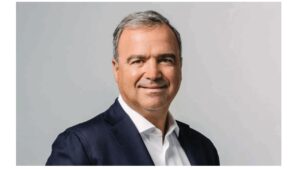



Asaf Pedro is a mentor at the Pioneers Club, where he supported early-stage founders by helping them turn complexity into clarity, sharpen their focus, and move forward with grounded, practical plans.
Please briefly introduce yourself and your professional background.
Asaf Pedro: I’m Asaf Pedro. I work with early-stage founders across product, marketing, and business. I’ve worked with startups across different sectors, Web3 included. In the past year alone, I worked with around 20 startups.
I’m good at turning complexity into clarity. I help teams sharpen the problem, simplify the story, and focus on the biggest bottleneck so they can move forward with a grounded plan.
I’ve also worked on enterprise and public sector projects, which gave me insight into larger-scale constraints alongside early-stage work.
What motivated you to become a mentor at the Pioneers Club, and what particularly appeals to you about this role?
Asaf Pedro: I went through an early startup program led by Manu, before Pioneers Club existed. It was a small group of founders. I really enjoyed it, especially as a solopreneur.
I liked sharing ideas, challenging assumptions, and thinking things through with other entrepreneurs. I started mentoring partly to give back, and partly because I enjoy working with people like Manu and the wider community. But honestly, I keep doing it because I like it. I like being someone founders can think out loud with. I help them get clarity, narrow the focus, and decide the next step.
How do you define true progress for early-stage startups, especially in early product or prototype phases?
Asaf Pedro: True progress depends on the startup and the team. Early on, one of the strongest signals is that the team truly understands the problem they’re solving. They can explain it simply, so someone outside the company, the target customer, or an investor immediately gets it. In prototype phases, progress also means testing that understanding and those assumptions quickly, then learning from real user feedback whether they hold up.
Which of your professional experiences — for example, in technology, product development or business — are particularly relevant to you when you are supporting young startups?
Asaf Pedro: I’ve mostly worked in small startup environments, across product, marketing, and business. That’s where I’m strongest. I can zoom out and see the whole picture, not just one piece. I also speak both sides, technical and business, so I can help teams align and make clean decisions.
What I bring most in mentoring is turning complexity into focus and a clear story. I help teams sharpen the problem, cut scope, and communicate it simply to users, partners, and investors. Then we translate it into a plan they can test fast. I’ve done this repeatedly with early teams. We go from a broad idea to a clear first use case and a testable MVP plan quickly.
What typical challenges do you see founders face when it comes to turning product ideas into marketable products — and how do you support them in this?
Asaf Pedro: Founders often struggle to narrow down. They start with a big vision, but they cannot reduce it to something small enough to test with limited time and resources. They try to build the full product too early. That leads to slow cycles and unclear learning.
Another common challenge is focusing too much on the what and how. They jump into features and implementation before they are clear on why the product is needed, what pain it solves, and for whom. When that is unclear, positioning gets messy. Targeting gets vague. The pitch turns into a feature list instead of a clear problem and outcome.
A third challenge is communication. If the team cannot explain the value simply, users engage less and investors struggle to remember it. The team can also become misaligned internally, because everyone is building toward a different version of the idea.
I support founders by tightening the fundamentals first. We clarify the problem in an elevator-pitch length. We define the target user and the first use case. We list the key assumptions that must be true. Then we design the smallest test or MVP to validate those assumptions quickly, ideally with real user feedback. If the test is unclear, the scope is still too big.
In your opinion, how important are vision and strategy compared to agile, iterative approaches in a startup context?
Asaf Pedro: They go together. Vision is the destination and the fuel. Strategy is the route. Agile iteration is how you move, learn, and adjust the route based on what you discover. Without vision and strategy, you iterate fast but in the wrong direction. Without iteration, the vision stays theoretical.
How do you help teams keep track of technical implementation, market validation, and product-market fit simultaneously?
Asaf Pedro: We set one goal and pick the biggest bottleneck. Then we focus on the most impactful next step. We revisit priorities every session and adjust based on progress and learning.
How do you assess the role of mentoring and external feedback in the early startup phase compared to internal decision-making and self-organization?
Asaf Pedro: External feedback can be very helpful, but it can also distract early teams. Founders still need to own the decisions and the outcomes.
Most advice comes with good intention, but it can still be wrong. And sometimes the source is simply not aligned. So I push teams to be selective about who they listen to, when, and how much, including my own input. I share my view, but never as dogma. We challenge the feedback against the goal, the user, and what the team can realistically execute right now. If it fits, we use it. If it does not, I suggest they rethink it or put it on the side for now.
The best moments are when a fresh perspective makes something obvious. I love when a founder says, “It was right in front of me. How did I not see that.”
From your perspective, what significance does transparent documentation of progress—e.g., monthly—have for investors, but also for the team itself?
Asaf Pedro: Transparent documentation gives investors context. What changed, what was tested, what was learned, and what the next risks are. It makes progress easier to judge in a fast and risky environment.
For the team, it creates accountability and alignment. It keeps decisions and learnings in one place. It also helps onboarding and prevents the team from rehashing the same conversations.
The key is finding the right level. Enough to stay clear, accountable, and consistent, without overinvesting time into documentation. A monthly update that captures goals, what changed, what was learned, a few key metrics, and next steps is usually enough.
What opportunities do you see for founders whose startup didn’t work out, but who can still leverage their documented progress and expertise from the Pioneers Club to be attractive hires for companies or corporate venture teams?
Asaf Pedro: Strong documentation turns a failed startup into proof of work. It shows what they built, what they tested, what choices they made, and what they learned. It gives tangible proof of what they actually did, instead of vague claims on a CV.
For corporate venture teams, it also shows how they think under uncertainty. You can see their decision trail, how they assess risk, and how they adapt when something is not working. It can also show how they operate. Whether they can build a plan, work with a method, judge risk versus reward, and execute, then reflect on what actually worked and what did not. That can be attractive even if the startup itself did not work out.
From your perspective, how has the startup landscape changed in recent years – especially in the areas of technology and product development – and what should founders pay particular attention to today?
Asaf Pedro: The pace has increased a lot. Building and testing simple MVPs is faster than ever. AI-assisted coding makes it easier for non-technical founders to prototype ideas that used to require a developer. Many people call this “vibe coding”. AI workflows also compress operations and research. A report that used to take days can now be drafted in an afternoon.
That speed creates new risks. Teams can become dependent on AI outputs without really understanding them. Unfiltered AI work can look polished but be wrong or shallow. AI is also persuasive, so it is easy to accept an answer that feels confident. AI can also sound confident and agreeable even when it is wrong. That makes it easy to accept output that feels good, instead of output that is correct. And if a team relies on AI as the expert, they may not have the expertise to judge what is correct.
Another challenge is focus. Because it is so easy to build fast, teams can keep jumping to the next thing and leave the real work unfinished. They confuse demos with traction.
So my advice is to use AI, but stay accountable. Treat AI as a tool, not an authority. Challenge the output, and make sure someone on the team can explain it in plain language. Know when you hit the ceiling and bring in a real expert. For example, AI-assisted coding can get you a demo fast. But once you need real architecture and maintainable code, foundations matter. Otherwise it becomes a bottleneck, and a risk.
What are your hopes for the future of the startup community in the DACH region or at the European level, and what influence do you think mentoring programs like the Pioneers Club can have on it?
Asaf Pedro: I hope the startup community in the DACH region keeps growing, especially right now, when change is accelerating. If a region stays stagnant, it gets left behind, and it compounds.
Programs like the Pioneers Club can help make the step forward feel doable. Not by pushing one worldview, but by creating a space where builders, more traditional minds, and innovators can learn from each other. I like the idea of a future where progress does not erase the human side. Where tech, nature, and tradition can coexist with innovation.
Picture Credits: Armin Buhl (photodesign-buhl.de)
Thank you Asaf Pedro for the Interview
Statements of the author and the interviewee do not necessarily represent the editors and the publisher opinion again.