

The Polish energy tech pioneer PSTRYK is redefining how consumers buy electricity by offering real-time dynamic pricing, smart app-driven management, and an integrated trading model.
Can you briefly introduce PSTRYK and tell us how the idea for building a technology-driven energy company first came about?
Pstryk is a Polish energy tech company that sells households electricity at real hourly market prices, with a mobile app that helps them act on those prices: shift consumption to cheaper hours and get the most out of rooftop solar, heat pumps and EVs. We were founded in 2024 and operate across Poland.
The starting point was a simple observation: banking and telecoms went through their consumer revolutions years ago. Energy is the last major industry still waiting for its paradigm shift. In Poland, the way households buy electricity hadn’t changed for generations: flat tariffs, zero transparency, zero control. Meanwhile, all the technology needed to do it differently already existed. Someone just had to be stubborn enough to enter the market everyone else preferred to complain about.
Who are the people behind PSTRYK, and what experiences have shaped the company’s journey so far?
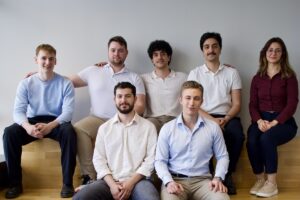
Our team deliberately combines two worlds that rarely meet: consumer brand building and deep energy expertise. Together with Magdalena Górska-Warchoł, our CFO, we previously co-created Health Labs Care, one of Poland’s fastest-growing direct-to-consumer brands, for which we received the EY Entrepreneur of the Year award in 2022. Earlier, we worked together on Perfect Gym Solutions, a Polish technology company that went international. Leszek Jastrzębski, Pstryk’s co-founder and a technology investor, leads strategy. The regulated side of our group is run by Mirosław Bieliński, former CEO of ENERGA, one of Poland’s largest utilities, with decades of experience in regulated energy markets.
That mix is the point. We believe the energy market has lacked one skill above all: building products and brands that genuinely follow customers’ needs. That is exactly what consumer-brand founders bring.
What is PSTRYK’s long-term vision, and how do dynamic electricity pricing and technology help you achieve it?
Our mission is to move Polish consumers from being passive energy buyers to informed participants who decide when and how they use electricity. Long term, we see Pstryk as the missing link between households and the energy system. Our lead investor, Future Energy Ventures, called it “the type of neo-utility that will define the next decade of energy innovation”, and we fully subscribe to that direction.
Dynamic pricing is the engine of this vision. Once your electricity price follows the real market, every home device, from solar panels to an EV charger, turns from a cost into an asset you can optimise. Technology makes that optimisation effortless.
Who is your primary target audience, and what challenges are you solving for households and prosumers?
Our sweet spot is households consuming around 10,000 kWh a year: homes with rooftop PV, a heat pump and an electric car, versus a Polish median of 2,000–2,500 kWh. For these families, energy is a serious line in the household budget, and our product turns their installations into real sources of savings.
The challenge we solve is twofold. First, lack of transparency: people simply don’t know what electricity costs hour by hour. Second, lack of agency: even if they knew, flat tariffs gave them no way to act on it. We fix both.
Many consumers are still unfamiliar with dynamic electricity pricing. How do you build trust and encourage them to adopt this new approach?
Honestly, this is the hardest part of our market. Awareness that you can even switch your electricity supplier is minimal in Poland; Google searches for it number in the dozens per month. We are essentially marketing a freedom most people don’t know they have.
So we don’t start by educating about “dynamic tariffs” as a concept. We start with the bill: we show people, in plain numbers, what they actually pay and what they could pay. The app gives full visibility into prices and consumption in real time. Transparency, consistently delivered, is what builds trust.
What makes PSTRYK different from traditional energy suppliers and other companies offering dynamic tariffs?
Two things. First, we are end-to-end: we hold our own energy trading licence through our subsidiary Bankilo Obrót, we sell the electricity and we build the technology. We are not an app bolted onto someone else’s tariff. In practice, there is no other company on the Polish market offering this complete model.
Second, our DNA: we approach energy like a consumer brand, not a utility. The product has to be simple, transparent and genuinely pleasant to use, which is a sentence rarely spoken about electricity suppliers.
Your platform gives customers greater control over their energy consumption. Why is transparency so important in today’s energy market?
Household energy prices are a topic where emotions often run higher than facts, and where public debate changes direction frequently. Pstryk stays deliberately outside of that debate. We are strictly apolitical: our answer to price uncertainty is not an opinion but a number, updated every hour.
When customers see the actual market price of electricity, they can make their own decisions regardless of what is currently being discussed or promised around them. We believe an informed customer is the foundation of a healthy energy market, in any political weather.
The energy sector is evolving rapidly. What have been the biggest challenges for PSTRYK, and how have you addressed them?
The barriers to entry in our market are brutal, and that is precisely why we have effectively no end-to-end competitors. An energy trading licence in Poland takes six months to a year and requires PLN 10 million (~€2.5 million) in capital held with the regulator. The market is capital-intensive and demands patience with a regulatory environment that keeps evolving.
We addressed it the hard way: we went through the full licensing process, secured the capital, and built a group structure that pairs technology people with veterans of the regulated market. That combination is our strongest protection against competition, and it cannot be copied quickly.
How do digital tools and real-time energy insights help your customers make better decisions about their electricity usage?
The app shows the current price, the price curve for the day ahead, your live consumption, your solar production and your EV charging, all in one place and updated in real time.
On top of that, we give simple daily price guidance: use more between these hours, less between those. Increasingly, automation does the work, steering home devices to consume when electricity is cheapest. The customer doesn’t need to become an energy trader. The product does the trading logic for them.
What new products, features, or developments are currently on PSTRYK’s roadmap?
The new funding goes into three directions: deepening our technology, scaling operations and expanding the availability of our services to more households across Poland.
On the product side, our focus is increasingly on automation, making home energy assets work together intelligently without the user lifting a finger.
Where do you see PSTRYK in the next five years, and what role do you want the company to play in the future of the European energy market?
Our immediate ambition is bringing our offering to hundreds of thousands of households across Poland, a market which, in terms of household energy consumption, is as large as the rest of Central and Eastern Europe combined. There is an enormous amount to do at home.
Longer term, we want Pstryk to prove something bigger: that household flexibility, long discussed across Western Europe, can scale first in the market where prices bite hardest. If it works here, it works everywhere.
What are the three most important pieces of advice you would give to founders who want to build an innovative company in a highly regulated industry?
First: treat regulation as an ally, not an enemy. Licences, capital requirements and compliance feel like walls when you are outside. Once you are through, they become your strongest protection, because most competitors will simply never make the journey.
Second: pick a market that is hard for structural reasons, not broken ones. The most difficult markets are often the last to change, and that is exactly where the biggest change is still ahead.
Third: as in any business, hire the best people you can find, across every discipline you need. Our team brings together consumer brand and technology builders, but also veterans of the regulated energy world, and it is the combination that works: none of these perspectives would succeed here alone. Innovation gets all the headlines, but it is experience, in all its forms, that keeps the lights on.
Picturecredits Credits PSTRYK
Thank you Jacek Szlendak for the Interview
Statements of the author and the interviewee do not necessarily represent the editors and the publisher opinion again.