



Agile Robots Hits $8.5bn Valuation as SoftBank and NVIDIA Back $500m Funding Round
The Munich-based robotics company Agile Robots has secured $500 million in fresh funding, putting it among Europe’s most highly valued private robotics businesses as investors look beyond generative AI towards industrial automation.
Munich, 15 November 2026 – Agile Robots, the German Physical AI company, has raised $500 million in a Series F funding round at a valuation of $8.5 billion, according to an announcement issued on 12 November.
Led by SoftBank Group, the round attracted investment from NVIDIA, Hitachi Group – including Hitachi and Hitachi Ventures – and T.Capital, among others. It brings the Munich-based company’s total funding raised to $2 billion.
The investment comes as the artificial intelligence industry increasingly turns its attention to machines capable of performing physical tasks. For Agile Robots, the challenge is no longer simply developing intelligent robotics technology, but producing and deploying it economically at industrial scale.
Agile Robots Funding: Key Facts
- Company: Agile Robots
- Headquarters: Munich, Germany
- Founded: 2018
- Funding round: Series F
- Capital raised: $500 million
- Company valuation: $8.5 billion
- Total funding raised: $2 billion
- Lead investor: SoftBank Group
- Other investors: NVIDIA, Hitachi Group and T.Capital
- Industry: Physical AI, robotics and industrial automation
- Global deployments: More than 20,000 industrial robotic solutions, according to the company
- Expansion plans: United States, Germany and additional international markets
- Funding announcement: 12 November 2026
From Artificial Intelligence to Physical AI
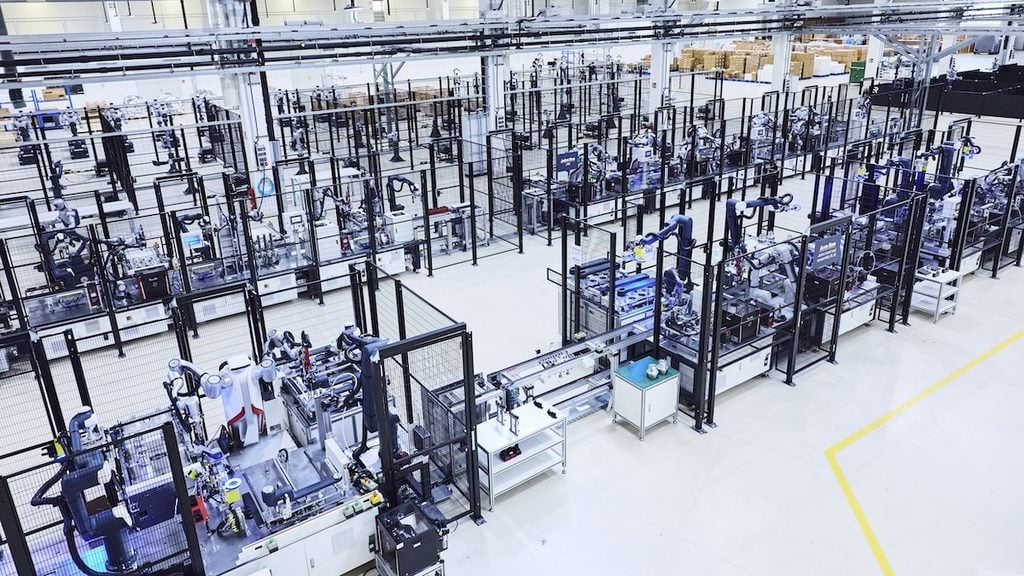
Founded in 2018 as a spin-off from the German Aerospace Center (DLR), Agile Robots develops robotic systems that combine artificial intelligence, sensors and precision engineering.
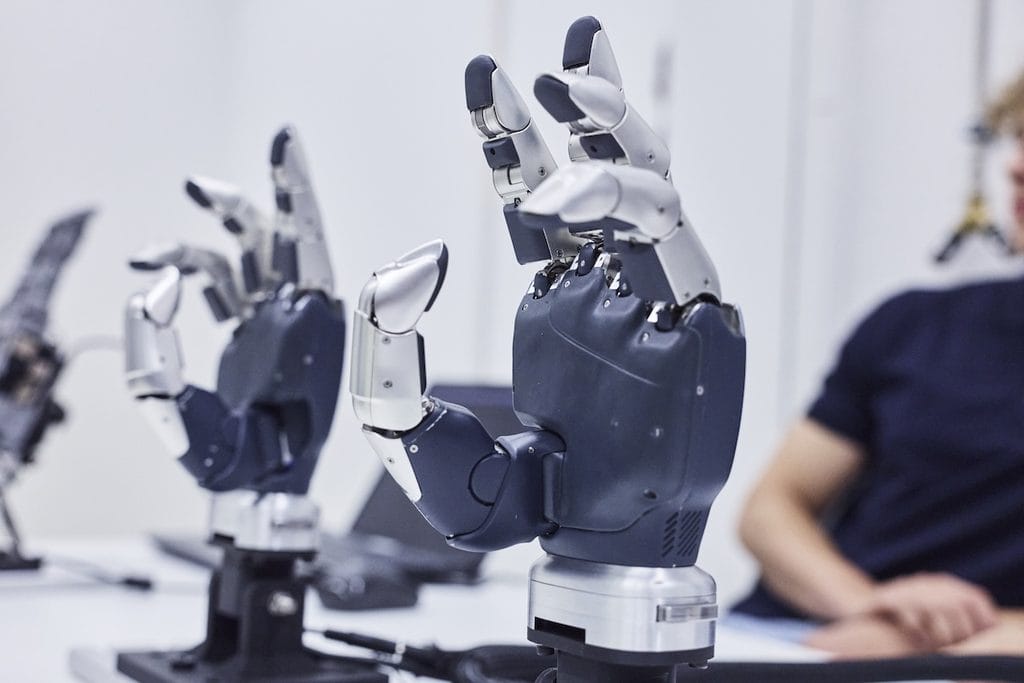
Its products range from industrial robotic arms and dexterous hands to mobile and humanoid robots, supported by proprietary software and AI models.
The distinction between conventional automation and Physical AI is commercially significant. Traditional industrial robots generally perform predefined tasks in structured environments. AI-enabled systems aim to interpret changing conditions and adapt their behaviour accordingly.
That could open up more complex activities in manufacturing, logistics and electronics assembly, where tasks have historically depended on human dexterity and judgement.
Yet technical capability alone will not determine adoption. Manufacturers must be convinced that these systems can operate safely, reliably and at a cost that justifies replacing or supplementing existing processes.
SoftBank and NVIDIA Back Industrial-Scale Robotics
SoftBank’s decision to lead the latest funding round, alongside NVIDIA’s participation, puts Agile Robots in the spotlight as investors seek commercial applications for artificial intelligence beyond software.
The new capital will finance international expansion, further robotics development and additional manufacturing capacity.
Dr Zhaopeng Chen, founder and chief executive of Agile Robots, sees Physical AI as a fundamental shift in how industrial work is organised.
“Physical AI will fundamentally change how the world builds, moves and makes things. Our vision is intelligent robots working alongside people in factories and warehouses everywhere, and Agile Robots is determined to lead that shift,” Chen said.
Dennis Chang, Managing Partner at SoftBank Investment Advisers, highlighted the importance of translating research into commercial deployment.
“We believe Physical AI will transform industries. Agile Robots combines deep robotics expertise with the ability to execute at industrial scale, enabling it to bring Physical AI into everyday operations,” Chang said.
The participation of prominent technology investors gives Agile Robots additional financial backing, although the announcement does not disclose individual investment amounts or the terms of the funding round.
Germany Remains Central to Manufacturing Plans
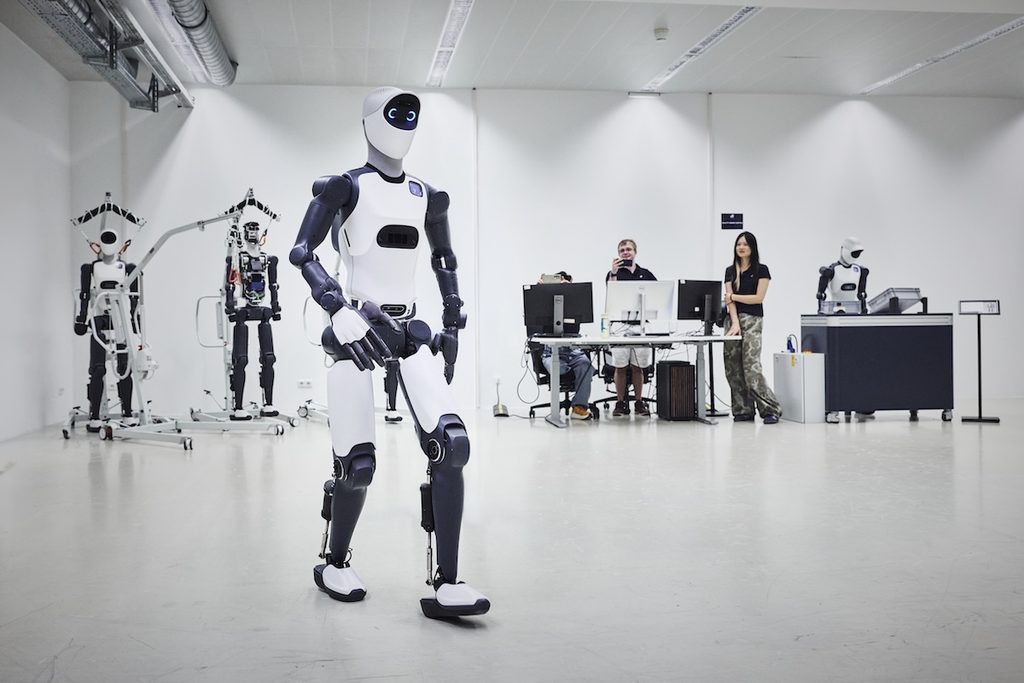
Agile Robots is investing in manufacturing capacity as it prepares for greater demand.
Earlier in 2026, the company opened a production facility in Fürstenfeldbruck, near Munich. According to Agile Robots, the site can manufacture up to 10,000 legged and wheeled humanoid robots annually.
That is a statement of production capacity, not confirmed annual output.
The distinction matters. Building a factory capable of producing thousands of advanced robots is different from securing sufficient orders, maintaining consistent production quality and delivering machines that operate economically in customers’ facilities.
Germany’s established engineering expertise and industrial supply chains provide a potential advantage, particularly as European manufacturers examine how automation could help address productivity pressures and labour shortages.
For Agile Robots, the immediate challenge is converting manufacturing capacity into sustained commercial demand.
An Established Industrial Business, Not Just a Robotics Concept
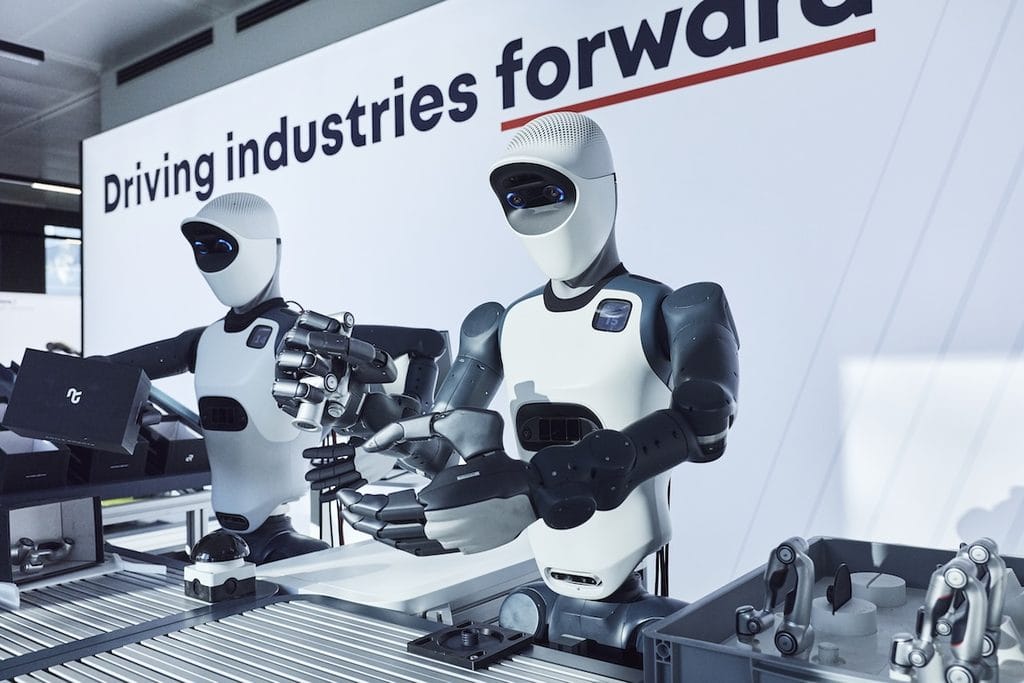
Unlike robotics ventures still primarily focused on laboratory prototypes, Agile Robots already operates across several industrial markets.
Its customers include businesses in automotive manufacturing, consumer electronics, logistics and other sectors.
The company reports more than 2,000 research and development specialists and a portfolio of over 650 patents.
It has also expanded through acquisitions, including Franka Robotics, known for its robotics research platform, and Krause Automation, an industrial automation specialist acquired from thyssenkrupp.
These businesses give Agile Robots expertise spanning research, hardware engineering and the integration of automation systems into existing industrial operations.
However, established industrial deployments should not be confused with widespread commercial adoption of autonomous humanoid robots. The latter remains a developing market, with unresolved questions surrounding costs, reliability, safety and practical productivity gains.
What Does Agile Robots’ $8.5bn Valuation Tell Investors?
The latest financing values Agile Robots at $8.5 billion, making it one of Europe’s more highly valued privately held robotics companies.
The valuation reflects expectations about the commercial potential of Physical AI, but it reveals relatively little about the company’s underlying financial performance.
Agile Robots has not disclosed revenue, profitability or detailed financial terms in its funding announcement.
Without those figures, investors and industry observers cannot assess the valuation against sales, earnings or cash generation.
The broader investment argument is nevertheless clear: intelligent robotics could extend automation into industrial tasks that conventional machines struggle to perform.
If these systems become sufficiently reliable and affordable, manufacturers may be able to automate more complex production and logistics processes.
The uncertainty lies in the speed of adoption and the economics of deployment.
For Agile Robots, the next phase will be measured less by fundraising milestones than by customer demand, production efficiency and the commercial performance of its AI-enabled systems.
What the Funding Means for UK and European Industry
Agile Robots’ financing is relevant beyond Germany because British and European manufacturers face many of the same structural challenges: productivity
Photo/Source: Agile Robots SE Leopold Fiala – Written with AI assistance.