


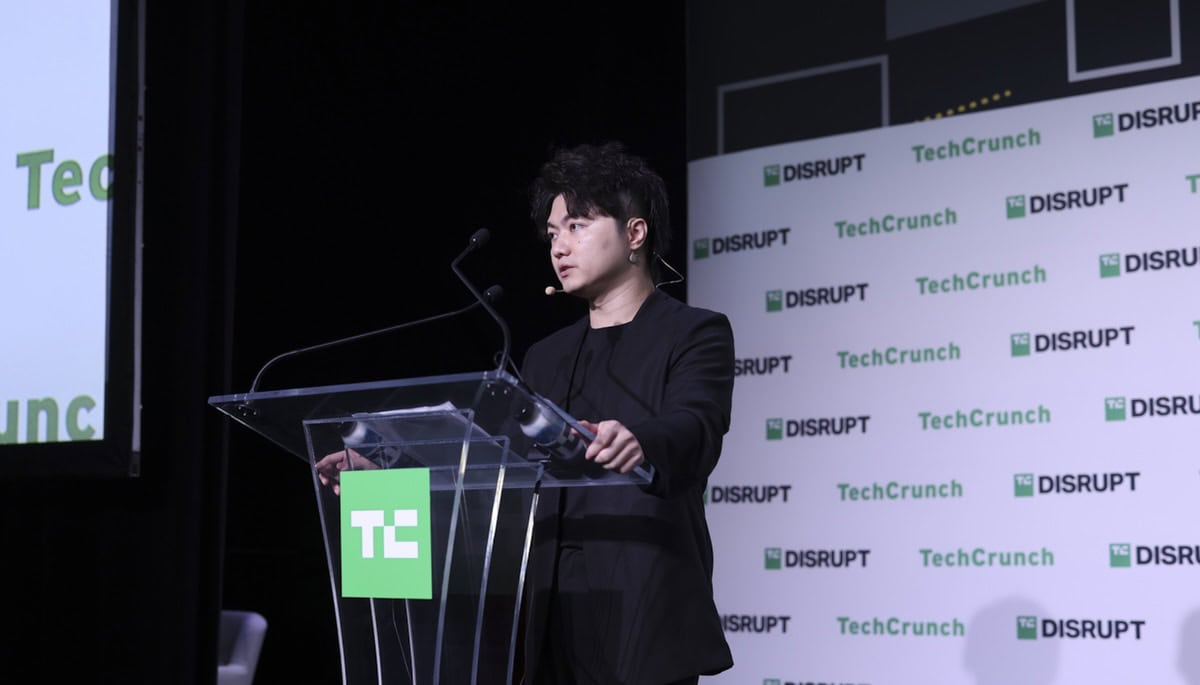
Chance AI is building a Visual Agent that helps people understand the world around them through AI, combining Visual AI with meaningful context and real-world interaction.
Could you please introduce yourself and tell us the story behind Chance AI?
I’m Xi Zeng, founder and CEO of Chance AI. My background sits at the intersection of design, consumer technology, and cognition. Before starting Chance, I worked across OnePlus, OPPO, and ByteDance, building products that lived somewhere between hardware, software, and human behavior. Before industry, I did a PhD focused on how people understand the world through perception and meaning.
The story behind Chance AI started with a simple frustration: AI had become very good at talking, but not very good at helping people understand the real world around them. Most products assumed the interaction should begin with a question. But in life, that’s usually not how curiosity starts. You see something first, then you want to understand it.
That insight turned into what we now call a Visual Agent. Chance AI is built around the idea that the camera should not just capture images — it should become a gateway to context, meaning, and action. That is why our core loop is so simple: Snap → Know → Do → Share.
Dr. Xi Zeng, how did your experiences at OnePlus and ByteDance influence the creation of Chance AI?
OnePlus taught me something very important about product design: great technology should feel powerful, but never heavy. It should reduce friction, not add it. That philosophy stayed with me. It’s one reason Chance AI is camera-first and friction-light — no complicated setup, no prompt box at the centre, just point and understand.
ByteDance gave me a different lesson. It showed me both the strength and the limitation of text-first AI. I saw how powerful chat-based systems could be, but I also felt very clearly that they were still downstream from how people actually encounter the world. In reality, people do not start with a prompt. They start with attention. That gap became impossible for me to ignore.
So in a way, OnePlus taught me simplicity, and ByteDance showed me the limits of the current AI paradigm. Chance AI sits at the intersection of those two lessons.
What inspired you to build a visual AI agent that goes beyond traditional image recognition?
The short answer is that image recognition was never enough.
Recognition tells you what something is. But most of the time, that is not the real user need. What people actually want is context. Why does this object matter? Why does this design feel right? What is the story behind this? What should I do next?
That is why we never wanted to build just another visual search tool. We wanted to build something closer to an interpretation layer — an AI system that helps people move from seeing to understanding.
A big early signal for us came from a side project I built for an exhibition. We didn’t have the budget to run a full-time guide team, so I built a simple AI guide app. What surprised me was that after the exhibition ended, people kept using it anyway — on buildings, toys, flowers, everyday objects. That was when I realised we were not building a guide for one event. We were seeing a new human behavior: people wanted a way to use AI to understand the visual world around them.
Chance AI aims to turn sight into insight. What does this vision mean in practice, and how do you plan to achieve it?
“Turn sight into insight” means moving from raw visual input to something more meaningful.
In practice, that means Chance does not stop at labeling an object or returning links. We want the system to explain what you are looking at, why it matters, and what your next step could be. Sometimes that next step is learning more. Sometimes it is saving, comparing, translating, buying, or sharing. But the key is that the product should help users cross the gap between noticing and understanding.
The way we achieve that is by building around the full interaction, not just the model output. We think a lot about the complete loop — how fast the camera opens, how quickly the system understands the scene, how structured the answer feels, what action comes next, and how that moment can become memory or social value later.
That is why we do not define Chance as “AI camera” or “image search.” We define it as a Visual Agent.
How does Chance AI help users better understand the world around them compared to conventional visual search tools?
Most visual search tools solve a relatively narrow problem: identify the thing and send the user somewhere else.
Chance is built around a different question: once a person notices something, how do you help them make sense of it in context?
So instead of just returning a label or a shopping link, Chance tries to provide explanation, story, background, visual logic, and the next step. It is less “this is a chair” and more “this is why this chair feels distinctive, what design language it belongs to, and what you might want to do with that understanding.”
That difference may sound subtle, but it changes the entire product. We are not trying to build a better lookup tool. We are trying to build a system that helps users form judgment. That is why our language internally is less about recognition and more about interpretation.
Who is the primary target audience for Chance AI, and what needs are you addressing for these users?
Our earliest and strongest audience is younger, visually native users — especially Gen Z users who already use their camera as part of how they think, shop, travel, create, and express themselves. Externally, we often describe them as exploration-minded, female-leaning, and strongest in North America, Europe, and Japan.
What makes them especially relevant is that they do not treat visuals as “content” only. For them, visuals are part of decision-making. They use images to decide what to wear, what to buy, what to post, where to go, and how to understand the world around them. That means the product is not addressing just one need. It is addressing a cluster of related needs: understanding, judgment, taste, memory, and self-expression.
In a way, Chance is not just helping them know more. It is helping them orient themselves better.
What makes Chance AI unique in the rapidly growing field of AI-powered visual applications?
I think there are three things.
First, our product starts from a different assumption: that vision is not an add-on to AI, but the primary entry point for many real-world interactions.
Second, we focus on the interpretation layer. We are not trying to stop at identification. We are trying to move from what something is, to why it matters, and what should happen next.
Third, we are building not only a tool, but a system that can grow into memory, collections, and community. That is important, because the long-term value of a product like this is not just one answer — it is the relationship that forms over time around what a user notices, saves, revisits, and shares.
That is why we believe Chance is not just part of the visual AI trend. It points to a broader category shift.
Providing meaningful explanations in around two seconds across 17 languages is an impressive achievement. What were the biggest technical challenges in making this possible?
The biggest challenge was not just speed. It was doing speed and meaning at the same time.
It is relatively easy to build something that is fast but shallow, or thoughtful but slow. Our challenge was to make the interaction feel immediate enough for real life, while still delivering something richer than a simple label.
That meant solving several things at once: routing the right visual input, managing reasoning, structuring outputs, keeping latency low, and making the product work naturally across languages without losing coherence or quality. We’ve talked publicly about supporting 17 languages and introducing voice as well, but the harder part was making the experience feel simple despite the complexity underneath.
In a way, our product challenge has always been: how do you hide complexity rather than show it off?
Chance AI reached the number one position on Product Hunt. What impact did this milestone have on the company’s growth and visibility?
Product Hunt mattered a lot for us, especially early on.
It did two things. First, it gave us visibility among a very high-signal audience — early adopters, builders, investors, and people who are actively looking for new product categories. Second, it gave us external validation that the idea resonated beyond our own intuition. We were not just building something we personally found compelling; there was real outside interest.
But what mattered even more than ranking first was what happened afterward. Product Hunt helped make the category legible. It made it easier for people to see that Chance was not just another AI app, but a different kind of interaction model. And that visibility has helped with talent, investors, users, and media.
What have been the most valuable lessons you and your team have learned since launching Chance AI?
One big lesson is that category clarity matters as much as technology. If people misunderstand what you are building too early, they stop looking closely.
Another lesson is that real user behavior is far more valuable than compliments. Interesting is not enough. What matters is whether people come back, whether they use the product in real life, and whether it starts to become part of how they move through their day.
And finally, we learned that subtraction is often the most important product move. Some of our best decisions came from removing friction — especially anything that made the experience feel too much like a chatbot. The simpler and more natural the interaction became, the more the product started to make sense.
What are the next major goals for Chance AI, and what new features or developments can users look forward to?
Our next major goal is to make the behavior stronger and more repeatable — to make Chance the default thing people open when they want to understand something they are seeing.
In terms of product, that means going deeper in three directions: better action, better memory, and better personalization. We want the system to become more useful in real-world moments, more aware of what the user has already seen and saved, and more capable of giving context that feels increasingly personal over time.
Longer term, I don’t think this ends as just an app. The app is the right place to start, but the larger vision is to build a new interface layer for AI in the real world — one that could eventually live much closer to future hardware and ambient computing.
Looking back on your entrepreneurial journey, what three pieces of advice would you give to founders building innovative AI startups today?
First, start with a real behavior, not a cool capability. Many AI products are built around what the model can do, not what people actually keep trying to do. That is usually a mistake.
Second, narrow earlier than you want to. Most early startups die from trying to be too many things. Go deep on the few behaviors that are clearly real before expanding outward.
Third, do not confuse momentum with signal. Downloads, headlines, and hype can all be useful, but repeated behavior is still the strongest truth. If people come back without being reminded, you are learning something real.
Picturecredits Chance AI team
Thank you Dr Xi Zeng for the Interview
Statements of the author and the interviewee do not necessarily represent the editors and the publisher opinion again.