


Table of contents
Leadership Under Uncertainty in 2025
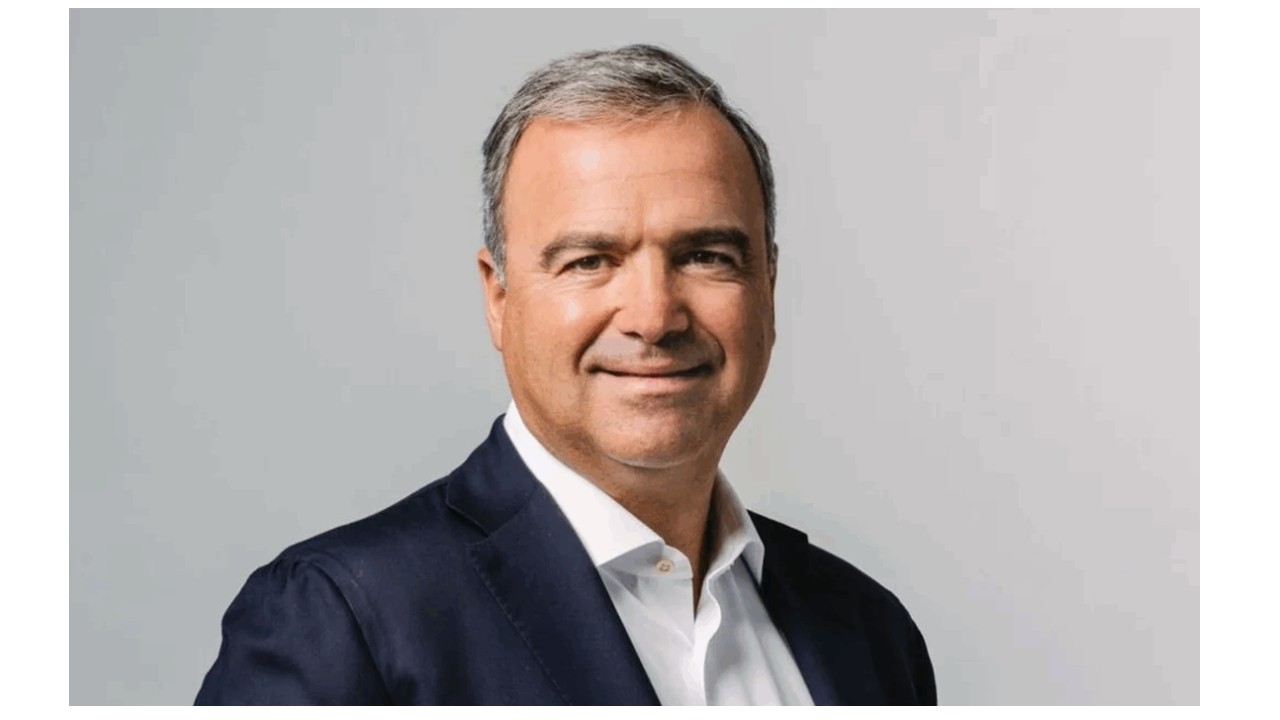
Leaders face more uncertainty in 2025 than perhaps any time in recent history. According to KPMG’s latest research, confidence among chief executives about global economic conditions has fallen to just over two-thirds—the weakest sentiment recorded since 2021. Nearly three-quarters of executives have already modified their growth plans to address interconnected challenges. Jean-Pierre Conte, managing partner of family office Lupine Crest Capital, built his decision-making approach during decades navigating volatile markets, unexpected crises, and high-stakes investments where wrong choices meant permanent capital loss.
The traditional playbook for executive decision-making no longer works. Economic volatility, geopolitical tensions, and technological disruption create conditions where what looked solid last quarter may require rapid adjustment today. About half of chief executives now plan more conservative approaches for 2025 and 2026, favoring incremental moves over bold capital-intensive commitments. Jean-Pierre Conte’s experience leading a San Francisco-based private equity firm through multiple economic cycles taught him that effective leaders distinguish between risks worth taking and uncertainty that demands caution.
Recent CEO research highlights the capabilities most valued today: quick, agile decision-making tops the list at 26 percent, followed by transparent communication at 24 percent, and the capacity to identify and manage risks effectively at 23 percent. These capabilities don’t emerge accidentally—they develop through deliberate practice making difficult decisions under pressure. “I think to be a businessperson, you need to be optimistic,” Jean-Pierre Conte has noted about his decision-making philosophy. “To be a business builder, you need to be optimistic about the future, and you need to know you can have an impact on things by sheer hard work or thinking about things differently.”
Building Decision-Making Frameworks That Work Under Pressure
Jean-Pierre Conte’s approach to complex decisions begins with understanding what’s actually at stake. Research on private equity fund risk management identifies three distinct categories: market risk stemming from macroeconomic factors, liquidity risk relating to position exit challenges, and cash flow risk involving distribution timing uncertainty. Each requires different evaluation methods and mitigation strategies. Leaders who conflate these distinct risk categories make poorer decisions because they apply the wrong frameworks to the problems they face.
Thorough due diligence forms the foundation of sound decisions. Studies of private equity risk management emphasize that careful evaluation of target companies’ financial health, market position, and management quality helps identify potential red flags before committing capital. Jean-Pierre Conte applied this principle not just to investment decisions but to operational choices throughout portfolio companies—evaluating management hires, business pivots, and exit timing with the same rigor as initial acquisition analysis.
The best decision-makers recognize what they don’t know. Chief executives acknowledge they must rethink organizational roles and capabilities while adapting growth strategies to current realities. Jean-Pierre Conte’s board experience across healthcare technology companies, sports investments, and software firms exposed him to industries where domain expertise matters more than general business knowledge. He learned to identify when decisions required outside perspective from specialists who understood technical details beyond his expertise.
Managing Decisions When Information Is Incomplete
Perfect information rarely exists when decisions matter most. Financial volatility now ranks among the top concerns for 47 percent of CEOs, representing a significant increase from just the previous quarter. Jean-Pierre Conte’s investment career taught him that waiting for complete certainty often means missing opportunities entirely. The challenge lies in distinguishing between decisions that benefit from more analysis and those where delay creates bigger problems than imperfect information.
Private equity firms increasingly use risk analytics and modeling tools that apply machine learning to historical data, predicting potential risks and market trends. These tools simulate different scenarios, providing deeper insights into probability distributions rather than single-point forecasts. Jean-Pierre Conte’s analytical framework incorporated quantitative modeling while recognizing that models only capture patterns from past data—they can’t predict unprecedented events or structural market changes.
Scenario planning becomes essential when uncertainty is high. McKinsey research finds that executive teams and boards now regularly address questions like supply chain footprint decisions and how to build flexibility into operations. Jean-Pierre Conte practiced working through multiple potential outcomes before making commitments, asking not just what could go right but what specific steps would mitigate damage if circumstances deteriorated.
Balancing Speed With Quality in High-Stakes Decisions
Decision-making speed has become a competitive advantage. Quick, agile decision-making now ranks as the top leadership capability needed in today’s environment. Yet speed without quality creates different problems than slow deliberation. Jean-Pierre Conte’s experience showed him that the best leaders develop judgment about which decisions require extensive analysis and which benefit from quick action based on limited information.
Some decisions are reversible while others lock in consequences for years. Private equity fund structures create binding commitments with limited liquidity—investors typically cannot withdraw capital during lock-up periods, and exits through IPOs or acquisitions take considerably more time than selling public shares. Jean-Pierre Conte learned to identify decision reversibility as a key variable. Reversible choices tolerate faster action with less perfect information because mistakes can be corrected. Irreversible decisions justify more thorough analysis despite the time cost.
Portfolio monitoring provides early warning signals when decisions aren’t producing expected results. Regular performance assessment enables fund managers to spot developing problems and take corrective measures before situations deteriorate. The discipline of regular performance review—not just financial metrics but operational indicators and market position—allows leaders to adjust course before momentum makes change prohibitively expensive.
Building Organizational Decision-Making Capability
Great leaders don’t just make good decisions themselves—they build organizations capable of making sound choices at every level. Fast-moving planning processes, distributed authority, and careful attention to external signals now represent essential competencies for leadership teams navigating constant uncertainty. Jean-Pierre Conte’s board work emphasized developing this capability within portfolio companies rather than centralizing all important choices at the top.
Strong relationships with limited partners and stakeholders improve decision quality. Regular transparent communication fosters trust and confidence, increasing the likelihood of support for difficult choices that may not show immediate results. Leaders who maintain open channels during stable periods find they have more credibility when circumstances force uncomfortable decisions.
The measure of decision-making effectiveness isn’t perfection—it’s the ratio of good outcomes to opportunities pursued. Private equity risk management aims not just to prevent losses but to preserve capital, enhance returns through calculated risks, guide choices that align with goals, and build resilience for adapting to unforeseen events. Leaders who maintain this balanced perspective avoid both reckless gambling and paralysis from fear of mistakes. Decision-making under uncertainty requires accepting that some well-reasoned choices will produce poor results while some questionable decisions occasionally work out. The goal is tilting probabilities in favorable directions consistently over time, not achieving impossible certainty before acting.
Want to learn more? Read this interview with Jean-Pierre Conte.
Author: Harry Wilson is the Head of Digital Marketing Department at Globex Outreach. He helps clients grow their online businesses and occasionally writes blogs to share his experience with other professionals.
Statements of the author and the interviewee do not necessarily represent the editors and the publisher opinion again.