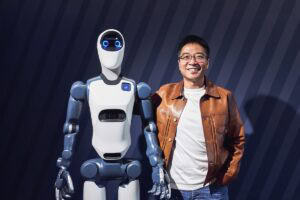


Theo is an AI-powered English speaking app designed to help beginners practice real conversations, improve their confidence, and develop everyday speaking skills.
Dmitrii, can you introduce yourself and tell us how the idea for Theo came about and what inspired you to develop an AI-powered English learning app?
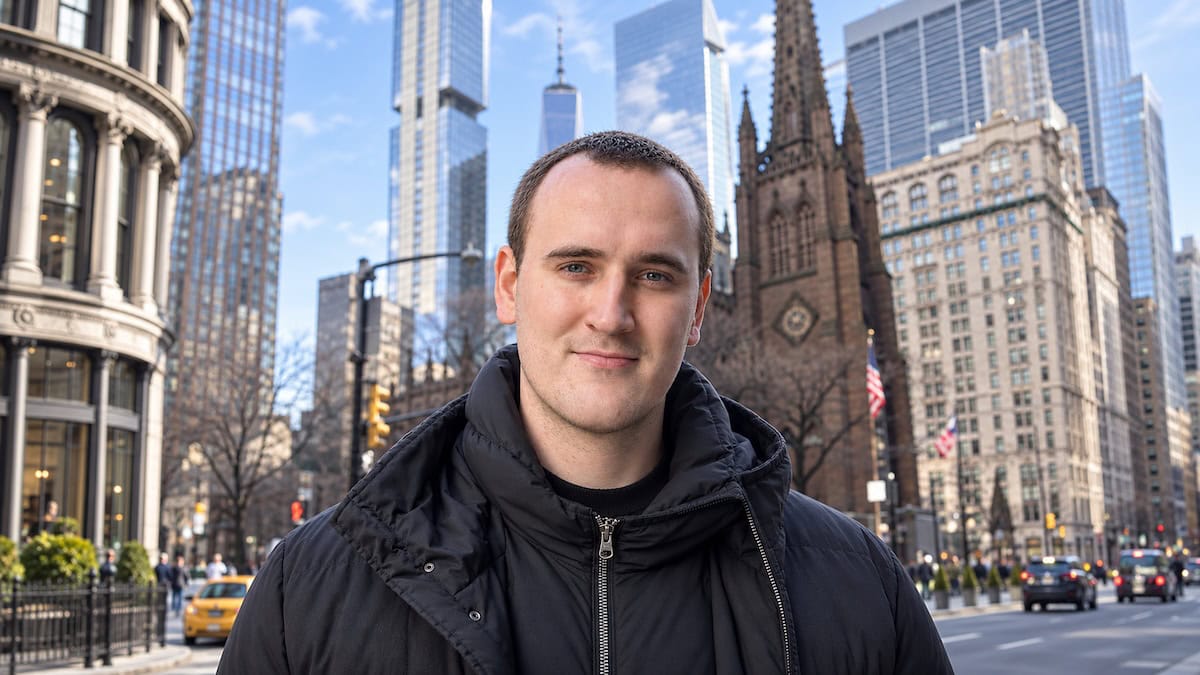
My name is Dmitrii Tsariabin, and I’m an independent software developer and the founder of Theo, an AI-powered English speaking companion.
The idea behind Theo came from a simple observation: understanding a language and being able to speak it confidently are two very different skills.
Many learners spend months studying vocabulary and grammar, yet still struggle to participate in a basic conversation. They know individual words, but when someone asks them a question in English, they need time to think, translate their thoughts, and construct an answer.
I wanted to build an application specifically for that moment.
My goal was not to create another traditional English course. I wanted to create an AI conversation partner that beginners could speak with every day, without feeling embarrassed about mistakes, pronunciation, or long pauses.
I started building Theo independently, working on both the mobile application and its conversational backend.
For me, Theo is about making regular speaking practice accessible to people who may not have the confidence, money, or opportunity to practice with a human conversation partner.
What exactly is Theo, how does the application work, and which challenges in traditional language learning are you trying to solve for beginners?
Theo is a voice-first AI application designed primarily for people at beginner English levels, particularly A0–A2.
The experience is intentionally simple. Instead of navigating a large collection of lessons, exercises, and menus, users open the application and start a spoken conversation with Theo.
The interface is built around the idea that “Theo is calling.” This creates a more natural feeling of having a conversation rather than completing an exercise.
During a conversation, Theo responds to the learner’s speech, adapts the complexity of its language, and provides contextual assistance when the user gets stuck.
For example, users can ask for help formulating a response or translating something they do not understand.
The application also remembers relevant information from previous conversations, helping subsequent sessions feel more continuous and personalized.
The central problem I’m addressing is the gap between passive knowledge and active speaking ability.
I want learners to build a simple habit: open Theo, speak English for a few minutes, and gradually become more comfortable expressing themselves.
Many language learning apps focus on vocabulary, grammar, and structured exercises. Why did you decide to concentrate on real-time spoken conversations, and what makes Theo different from existing AI language learning platforms?
Vocabulary and grammar are important, but knowing the rules of a language does not automatically make someone comfortable speaking it.
Speaking is a separate skill that requires practice.
I decided to focus Theo on real-time conversation because I believe beginners benefit from frequent opportunities to produce their own sentences, even when those sentences are imperfect.
One challenge with many conversational AI systems is that they are designed for users who already communicate relatively fluently. Beginners often need more time, simpler questions, and additional support.
Theo is designed around those needs.
Rather than trying to provide every possible language-learning feature, I focus on a small number of things: accessible daily conversations, adaptive difficulty, patient turn-taking, contextual assistance, and personalized continuity between sessions.
I also wanted the experience to be extremely simple. A learner should not have to decide which lesson to complete before practicing.
My long-term goal is for Theo to feel less like educational software and more like a supportive conversation partner that users naturally return to.
One of Theo’s key features is adaptive conversation pacing, allowing beginners more time to think and formulate their answers. How does this technology work, and how does the AI recognize when a learner needs additional time or support?
This was one of the most important design challenges in building Theo.
In a conventional voice assistant, silence often indicates that a user has finished speaking. But for a beginner learning English, silence can mean something completely different.
The learner may be translating a thought, remembering a word, or trying to construct a sentence.
Theo’s conversational backend combines speech activity and turn-taking signals with dialogue context and information about the learner’s level.
The goal is to make the system more tolerant of hesitation while keeping the interaction responsive.
I also use conversational instructions and learner context to adjust the complexity of Theo’s responses, including vocabulary, sentence structure, and the way questions are presented.
An important distinction is that the system does not need to claim that it understands a user’s emotions or thoughts. Instead, it is designed to respond more appropriately to observable conversational behavior.
The difficult engineering problem is balancing patience and responsiveness. If the system interrupts too quickly, beginners become frustrated. If it waits too long, the conversation feels unnatural.
Improving this balance remains an important part of Theo’s ongoing development.
Theo also incorporates personalized memory to create a more individual learning experience. What information does the application remember, and how does this help users improve their speaking skills over time?
One limitation of many AI conversations is that each interaction starts from the beginning.
I wanted Theo to offer a stronger sense of continuity.
The application can retain relevant conversational context, such as subjects the learner has discussed, personal interests shared during conversations, preferences, and language-learning patterns.
Rather than treating every sentence as something that must be permanently stored, the idea is to extract useful context that can make future practice more relevant.
For example, if a learner frequently talks about work, travel, or everyday family activities, Theo can use that context to support more familiar conversations.
That matters because beginners often speak more confidently when the topic is meaningful to them.
Personalized memory also helps the application avoid feeling like a sequence of disconnected exercises.
Users have controls for reviewing and deleting saved memory and associated data.
My broader vision is to make AI language practice increasingly personal without making the experience complicated or unnecessarily intrusive.
Speech recognition can be particularly challenging when beginners hesitate, mispronounce words, or speak with strong accents. How does Theo handle these situations, and what technical challenges did you encounter while developing its conversational AI?
This is one of the most interesting technical challenges in the project.
Speech recognition systems can perform well with clear, fluent speech, but beginner conversations introduce additional complexity.
Users may pause in the middle of sentences, repeat words, change their minds, or pronounce something differently from a native speaker.
If the system interprets every pause as the end of an answer, the conversation quickly becomes frustrating.
I approached this by designing the conversational backend around imperfect speech rather than assuming users would always speak fluently.
Theo combines speech-processing services, dialogue context, and turn-taking logic to support more natural interactions.
When the system cannot reliably interpret something, asking for clarification can be more useful than confidently responding to an incorrect interpretation.
I also had to address practical real-time audio challenges, including latency, interruptions, microphone behavior, and the timing between AI speech and user speech.
These details may seem small, but they have an enormous influence on the quality of a voice conversation.
The biggest lesson has been that a technically functioning AI conversation is not necessarily a comfortable learning experience. Those are two different engineering objectives.
You built Theo and its conversational backend entirely on your own, without an external development team or venture capital. What motivated you to take this independent approach, and what were the biggest challenges during development?
I wanted to maintain direct control over the product, especially during its earliest stages.
Building independently allows me to make decisions quickly, test ideas with real users, and adjust the application without a large organizational structure.
I developed the mobile experience and the backend systems that coordinate conversations, personalization, usage limits, and the integration of external AI and speech technologies.
I am not training a foundation model from scratch. The engineering work lies in integrating existing AI capabilities into a coherent, reliable product designed for a specific audience.
That distinction is important to me.
One of the biggest challenges has been managing the entire development process independently.
I have to think simultaneously about user experience, real-time audio processing, backend reliability, analytics, operating costs, and distribution.
Voice AI creates particular challenges because delays, interruptions, and recognition errors are immediately noticeable to users.
At the same time, working independently has helped me understand every major part of the product.
I believe a small team—or even one developer—can build meaningful software today by combining technical expertise, disciplined experimentation, and carefully selected AI infrastructure.
Your application has already reached approximately 2,000 organic iOS installations. How did you attract your first users without external funding, and what have you learned from their feedback and learning experiences?
Theo’s initial growth has been an early opportunity to validate the product with real users rather than relying only on my own assumptions.
The application reached approximately 2,000 organic iOS installations without venture funding or a large marketing campaign.
At this stage, my priority has been understanding what happens after someone installs Theo.
Do users start their first conversation? How long do they speak? Where do they hesitate? Do they return for another conversation?
These behavioral questions have been especially valuable because they reveal problems that are not obvious during development.
For example, in one early iteration, the median conversation duration increased from approximately 30 seconds to around 112 seconds as the experience evolved. These were early product observations rather than controlled evidence of improved language proficiency, but they showed how much interaction design could influence engagement.
I have also learned that a learner’s willingness to speak is just as important as the AI’s ability to respond.
A product can have impressive underlying technology, but if someone feels uncomfortable during the first minute, they may never experience its value.
That insight continues to shape Theo’s development.
When developing an AI-powered application that processes spoken conversations, privacy and data security are important considerations. How do you protect users’ personal information and voice data, and what measures have you implemented to ensure responsible AI usage?
Privacy is especially important for a product built around conversations.
Users may discuss everyday experiences, personal interests, or situations from their lives, so I believe they should understand how their information is used.
Theo is designed to work with anonymous user identification rather than requiring a conventional account registration process.
The application processes speech to enable real-time conversations and can use selected conversational context to personalize future sessions.
I distinguish between information needed to operate a conversation and information retained for personalization.
Users can review and delete saved memory, and the application provides controls for deleting associated user data.
Theo also has a published privacy policy describing its data-handling practices.
From an engineering perspective, my priorities include limiting unnecessary data collection, making personalization understandable, and being careful about how third-party AI and speech services are integrated.
Responsible AI also means being realistic about the limitations of speech recognition and language models.
I want Theo to be useful and supportive, but I do not present it as a replacement for professional language instruction or as a system that can guarantee particular educational outcomes.
You are currently preparing a subscription model for Theo. What pricing strategy are you considering, and how do you plan to balance affordability for language learners with the costs of operating a voice-based AI application?
My current pricing plan is $6.99 per month or $39.99 per year for Theo Pro.
I want to keep a limited daily speaking experience available for free so that users can understand the product before deciding whether to subscribe.
Paid subscribers will be able to access longer conversations and a more complete daily practice experience.
The challenge with a voice-based AI application is that operating costs are directly connected to usage.
Real-time speech processing, AI-generated responses, and backend infrastructure all create ongoing expenses.
That means the subscription model has to be affordable for learners while also supporting the actual cost of delivering the service.
I am approaching monetization as an experiment rather than assuming the first pricing structure will be perfect.
I plan to study conversion, retention, conversation duration, and infrastructure costs together.
My objective is not simply to maximize revenue per user. I want a sustainable model that encourages learners to practice regularly and makes continued product development possible.
You are also preparing for international expansion. Which markets and target groups are you planning to focus on first, and what challenges do you expect when introducing Theo to users from different linguistic and cultural backgrounds?
Theo was designed for an international audience from the beginning.
My primary target group is adults and young learners who have basic knowledge of English but lack confidence in spoken communication.
I am particularly interested in mobile-first markets where English is important for education, employment, travel, or professional development.
Rather than committing immediately to one country, I want to evaluate demand and user behavior across different markets.
The application already incorporates multilingual elements, and localization will continue to be important as Theo develops.
However, translating an interface is only one part of international expansion.
Learners from different linguistic backgrounds may face different pronunciation challenges, use different sentence structures, or have different expectations about conversational speed and assistance.
Affordability is another consideration, especially when introducing subscriptions across markets with very different purchasing power.
My strategy is to expand gradually, use actual product data to understand where Theo delivers value, and improve the experience for specific learner groups instead of assuming that one universal design will work equally well everywhere.
What is your long-term vision for Theo, which new features or technological improvements are you planning, and what three pieces of advice would you give other founders who want to build an AI startup independently without a team or external investment?
My long-term vision is to make Theo a widely accessible AI speaking companion that helps people develop real conversational confidence in English.
I want users to feel that speaking English is no longer an intimidating activity, but a normal part of their daily routine.
From a technical perspective, my priorities include improving real-time responsiveness, making turn-taking more natural, strengthening personalized memory, and creating better ways to understand a learner’s progress over time.
I am also working toward broader platform availability and international growth.
I believe the next stage of AI applications will be defined less by access to increasingly powerful models and more by how well developers turn those capabilities into experiences that solve specific human problems.
For other independent founders, I would offer three pieces of advice.
First, solve a narrow problem extremely well. A focused product with a clear audience is often more valuable than an application trying to do everything.
Second, launch early and learn from real behavior. User feedback and actual usage data can challenge assumptions that seem obvious during development.
Third, understand the economics of your product from the beginning. AI makes it easier to build sophisticated software, but every API call and infrastructure component has a cost. A useful application must eventually become a sustainable business.
Building Theo has reinforced my belief that independent developers can create ambitious products without starting with a large team or significant external funding.
The key is to stay focused, keep improving the product, and build something people genuinely want to use.
Image Credits: private picture/ Theo
Thank you Dmitrii Tsariabin for the Interview
Statements of the author and the interviewee do not necessarily represent the editors and the publisher opinion again.