

WeRoad brings group travel and community together through shared travel experiences designed for solo travelers seeking real human connection.
How did the idea for WeRoad come about, and why did you decide to specialize in group travel?
WeRoad was born from a very personal situation. At thirty, it becomes increasingly difficult to align your time, your schedule and your tastes with those of your oldest friends who, through the natural course of life, drift further away. I wanted to travel, but I didn’t want to go alone, and I couldn’t convince anyone to come with me. I looked around and realized this wasn’t just my problem. it was a generational one. So, together with my co-founders, Erika De Santi and Fabio Bin, we built the solution we wished had existed: a way to travel solo, but never feel lonely.
What vision does WeRoad pursue for the future of travel?
We believe travel is evolving from a product into a platform for human connection. People today are not just looking to visit new places, they’re looking to belong. In a world increasingly shaped by AI and social media, genuine human connection is becoming both rarer and more valuable. Our vision is to build the world’s largest community of travelers, and to extend that sense of belonging beyond the trip itself into everyday life, through WeMeet. Travel will remain central, but it will be increasingly surrounded by micro-experiences that create the same relational dynamics in daily life.
Why are so many people today consciously choosing communal travel over traditional holiday offerings?
Because we are simultaneously the most connected generation in history and the loneliest. Studies show that roughly 30% of young adults report feeling lonely every day. Traditional travel answers the question of where to go. WeRoad answers the question of who to go with and who to become through the experience. What travel offers that daily life lacks is the right context: one where people can truly meet, lower their defenses and build real stories together. That’s what we create on every trip.
Which target audience is the primary focus of your trips?
Our core traveler is a Millennial or Gen Z, around 30 years old on average, who works in a medium or large company and travels solo. Around 90% of our customers book alone. They are independent enough to want to choose their own destination and pace, but they’re seeking shared experiences and authentic human connection. Many are people who have moved cities for work and are rebuilding their social network. They’re not just buying a trip, they’re investing in their social life.
What sets WeRoad apart from traditional travel operators?
We built a brand with a distinct cultural identity. We don’t talk about the travel product; we talk about the traveler. And we address their real needs: how hard it is to find people to share experiences with, how isolating modern urban life can be. Each trip is led by a Coordinator, not a guide, but a passionate fellow traveler who handles logistics while fostering genuine connections within the group. And we’ve built a community of over 4,000 Coordinators who are true brand evangelists. Today, people don’t just choose WeRoad because of a destination — they choose it because it’s WeRoad. “Let’s do a WeRoad” has become a synonym for group travel.
What role do community and social networking play in your concept?
Community is not a feature of WeRoad: it is WeRoad. We’ve built everything (product, brand, marketing..) around the possibility of creating real connections through shared experiences. Our community of Coordinators, over 4,000 people across Europe and now expanding to the US, grew entirely organically. Our community of travelers, over 300,000 people across 1,000+ itineraries since 2017, has a 60% rebooking rate and an NPS of 9/10. Those numbers don’t come from a great booking platform, they come from people who found something they didn’t expect: real friendships.
Many travelers book alone. Why does this model work so well, in your view?
Because it solves a real tension that didn’t have a solution before. People want independence to choose the destination, the pace, the mood of the trip, but they also want to share the experience. With WeRoad you book alone, but you travel with a group of like-minded peers in the same age range, with the same travel mood. You don’t have to negotiate with your friends for months. You don’t have to compromise. And you arrive somewhere knowing nobody, and leave with people you’ll stay in touch with for years. Around 90% of our customers travel solo for exactly this reason.
What challenges have you faced with WeRoad’s international growth?
Scaling a business built on authentic human experiences is very different from scaling pure software. Every new market requires people, operational quality, a local community, trained Coordinators and control over the experience. You can’t just flip a switch. The discipline is in balancing speed and sustainability — investing to open new markets, but doing it with a replicable, measurable and healthy model. The community has enormous economic value, but it must be protected. The real challenge isn’t just financing growth — it’s financing the right growth: the kind that keeps the product strong, retention high and the relationship with the community authentic.
How important are digital platforms and social media to your success?
Fundamental! We’ve built a social-first brand with over 3.5 million followers, not by promoting destinations, but by speaking the language of our community: often ironic, sometimes inspirational, always authentic. We only use real images, real videos, real people. We’ve invested heavily in organic content, trend-driven activations both online and offline, and copy that breaks through the attention barrier. Digital is also how we’ll lead our entry into the US, using targeted campaigns and strategic partnerships to identify our strongest markets before deploying the full community playbook on the ground.
Which types of travel or destinations are particularly in demand right now?
Adventure travel and nature experiences remain very strong. Japan and China are currently among our most sought-after destinations. Beyond Asia,Morocco is one of our most popular long-haul options: treks up Mount Toubkal are consistently among our most booked experiences. The Nordic countries are growing fast, especially for travelers looking for nature immersion and a real contrast from urban daily life. And in the end, Route 66 is already live as an itinerary and generating strong early interest. We’re also seeing huge demand for our shorter formats: WeRoad Weekend and WeRoad Express. These are itineraries of four nights or less, designed for people who want to take fewer days off work but still get a full group travel experience.
They’re also a great entry point for first-timers who want to try the WeRoad model in a softer way before committing to a longer trip. Destinations like Italy, Greece and Spain work incredibly well in this format close enough to feel accessible, rich enough to leave you wanting more. What cuts across all of these is a broader shift in why people travel. They’re less interested in ticking off a checklist of landmarks and more interested in living something meaningful with others. The destination matters, but it’s increasingly the backdrop, not the point. The point is who you travel with, and what you carry home from the experience.
What developments or new concepts is WeRoad planning for the coming years?
The biggest move is our expansion into the United States, funded by this $58M Series C led by Airbnb.Beyond the US, we’ll continue developing WeMeet as a standalone platform for everyday social life. The vision is to become a permanent infrastructure for human connection: not just when people are on holiday, but in the city, every week.
What three pieces of advice would you give to other founders?
First: solve a real problem, not a theoretical one. WeRoad was born from our own need; we built the product we wished had existed. That authenticity is impossible to fake and very hard to compete with.
Second: invest in your founder community as much as in your company. Some of the most important decisions I’ve made (and some of the biggest mistakes I’ve avoided) came from conversations with other entrepreneurs who had been through the same things. Building a company is hard enough; doing it without a network of peers who can challenge you, support you and share what they know is even harder. Find your community of founders and nurture it seriously.
Third: take care of your people before your product. The product can always be improved, but if you lose the people who believe in what you’re building, you lose everything. The best thing we ever did was attract people who genuinely cared about the mission, not just the job. Protect that culture fiercely, especially when you’re growing fast and hiring quickly.
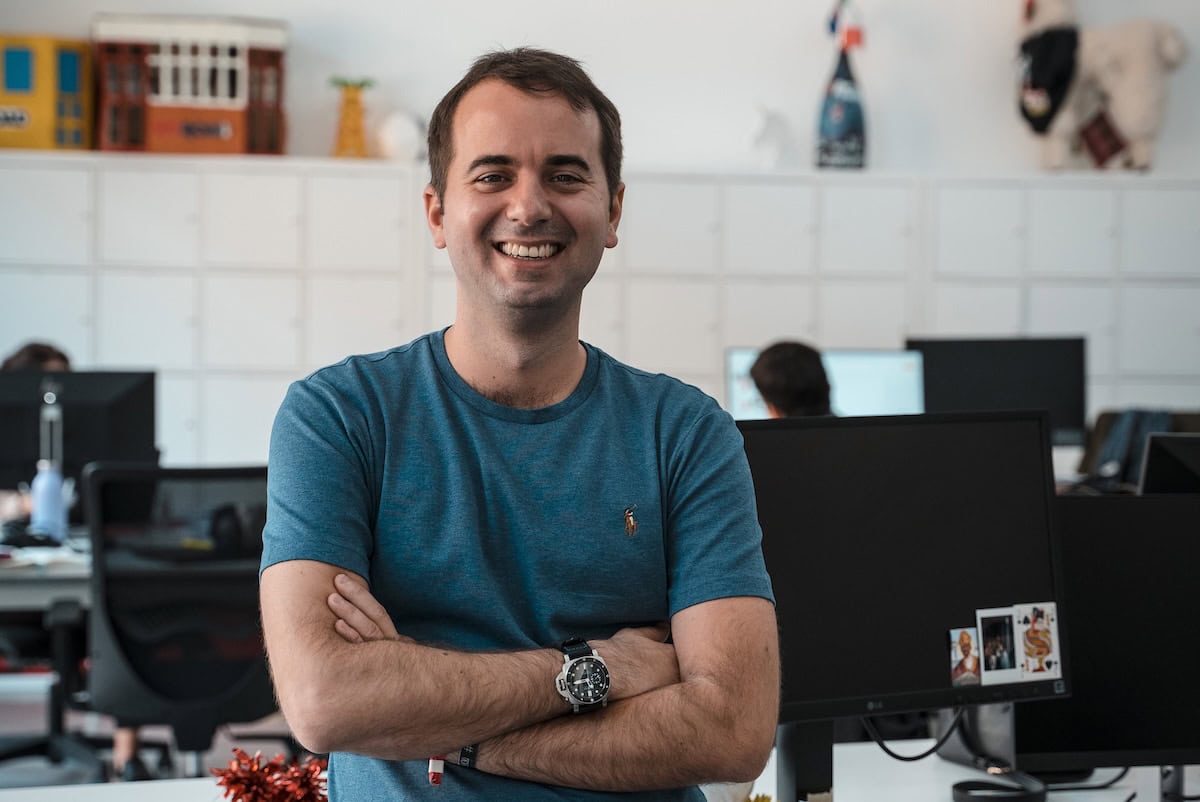
Picture: Paolo De Nadai Picturecredits: WeRoad
Thank you Paolo De Nadai for the Interview
Statements of the author and the interviewee do not necessarily represent the editors and the publisher opinion again.