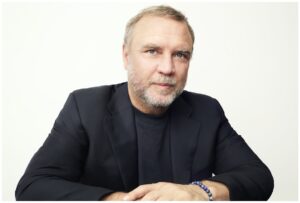


Founders, investors and companies define the dynamics of venture capital and shape how long term success is built.
As a Berlin-based Principal at KOMPAS VC, you are closely involved in sourcing and evaluating early-stage opportunities across several regions. How do you identify founders and companies that have the potential to build lasting impact rather than short-term success?
Lasting impact usually reveals itself early — in how founders think about the problem, not just the solution. I look for those who understand the structural reasons a market hasn’t changed yet, and who have the patience and conviction to change it anyway. Metrics matter, but the underlying reasoning matters more. I pay close attention to how founders respond to pushback. That tells you a lot about resilience and intellectual honesty.
Your investment focus spans the German-speaking region, CEE, parts of Southern Europe, and the US. What differences do you observe between these ecosystems, and where do you currently see the most untapped potential?
Each ecosystem has its own logic. The US moves fast and rewards boldness, sometimes at the expense of fundamentals. CEE produces technically exceptional founders who are often underestimated — and therefore undervalued. Southern Europe is maturing quickly, with strong talent pools that lack capital density. But the most exciting opportunity right now sits at the intersection of deep tech and the German Mittelstand. There are decades of industrial knowledge embedded in these companies, and founders who can unlock that with modern technology are building something genuinely defensible.
Due diligence is often described as both a science and an art. Which qualitative factors tend to be most decisive for you when assessing a founding team beyond metrics and pitch decks?
I look for three things: domain depth, self-awareness, and team dynamics under pressure. Domain depth tells me whether the founder has earned the right to win in this space. Self-awareness tells me whether they know what they don’t know. And watching how co-founders interact — especially when challenged — reveals whether the team will hold together when things get hard. They always get hard.
You work closely with founders beyond the initial investment. How do you define your role in helping teams scale their organizations while preserving culture and long-term vision?
My role shifts depending on the stage, but the constant is being a reliable thinking partner. When scaling, the biggest risk is that operational urgency crowds out strategic clarity. I try to hold space for that longer-term perspective — asking the questions that are easy to defer when you’re in execution mode. On culture, I believe founders have to own it entirely. My job is to flag when early decisions are creating friction they may not yet feel.
KOMPAS VC emphasizes industrial technology and sustainability-driven innovation. What qualities distinguish founders who are truly capable of turning complex, long-cycle technologies into scalable businesses?
Patience without complacency. Deep-tech and industrial founders often work in cycles that don’t fit the traditional VC playbook, and the best ones know how to sequence milestones in a way that keeps stakeholders aligned without diluting long-term ambition. They’re also unusually good at translating complexity — to customers, to regulators, to their own teams. That communication ability is underrated and often decisive.
You describe meeting founders with extraordinary visions and ambitions as a key motivation. How do you differentiate between visionary thinking and unrealistic ambition during the evaluation process?
Visionaries can draw a credible path from here to there. They may not have all the answers, but they’ve interrogated their assumptions rigorously. Unrealistic ambition, by contrast, often relies on a chain of best-case scenarios with no honest accounting of what needs to go right. The tell is usually the first hard question: visionaries engage with it, others deflect.
Building strong networks and long-term relationships is central to your approach. How important is trust in venture capital, and how can investors actively contribute to healthier and more collaborative ecosystems?
Trust is the foundation of everything. Capital is a commodity — relationships are not. Investors contribute to healthier ecosystems by being honest even when it’s uncomfortable, making introductions without keeping score, and supporting founders publicly when things are difficult. The European ecosystem in particular benefits when investors collaborate rather than compete on deal flow. A rising tide genuinely does lift all boats here.
Many founders today are navigating increasingly complex market conditions. What recurring challenges do you see among early-stage teams, and how can investors provide meaningful support beyond capital?
The most common challenge is prioritization under uncertainty — knowing what not to do when everything feels urgent. A close second is hiring: early-stage teams often underestimate how much a single mis-hire costs at that stage. Beyond capital, the most useful thing I can offer is pattern recognition — having seen similar situations across enough companies to spot what’s structural versus what’s noise. And sometimes, just a candid outside perspective from someone with no operational stake in the decision.
As venture capital becomes more competitive, the role of principals and early partners is evolving. How do you see your position changing in the coming years, particularly in relation to founders?
Founders have more options and more information than ever before. That’s a good thing — it raises the bar for investors to be genuinely useful. I see my role becoming more specialized: less about access to capital and more about the quality of engagement. Founders will increasingly choose investors based on demonstrated value, not brand alone. That accountability makes this work more meaningful, not less.
Looking ahead, what kinds of companies and leadership profiles do you believe will define the next generation of impactful startups in Europe and beyond?
The companies that will matter most are those bridging two worlds: deep scientific or industrial knowledge on one side, and the ability to build scalable, user-centric products on the other. Europe has exceptional raw material here — particularly in climate tech, advanced manufacturing, and enterprise software for complex industries. The leaders who will define this generation are intellectually rigorous, globally minded, and grounded enough to build for the long term in ecosystems that reward patience.
Picture Source KOMPAS VC
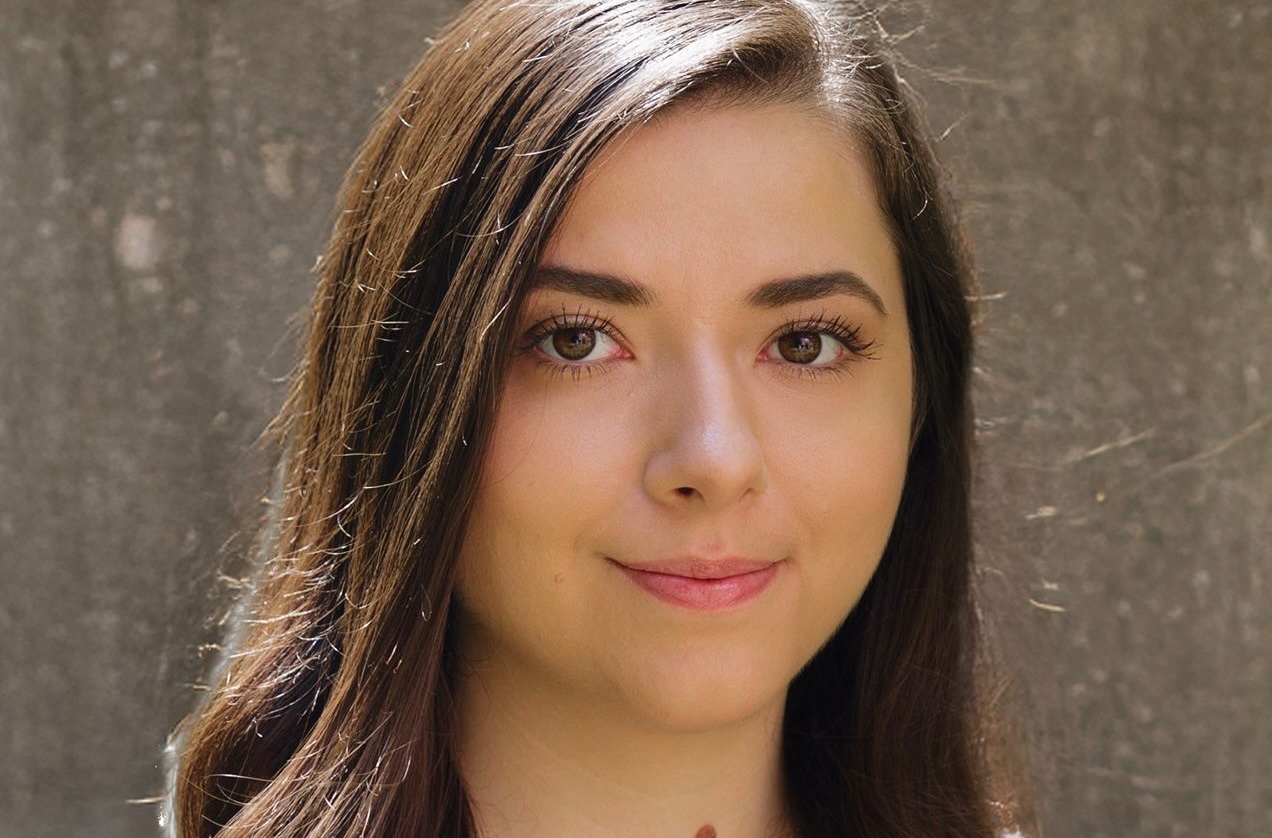
Thank you Ilena Mece for the Interview
Statements of the author and the interviewee do not necessarily represent the editors and the publisher opinion again.