

FLÆ Robotics is developing BE-A, an AI Hospitality Agent designed to automate routine hotel operations while supporting more efficient and personal guest service.
Could you briefly introduce FLÆ Robotics and explain how your own experience as a hotel owner led to the idea for BE-A?
FLÆ Robotics is building BE-A, an AI Hospitality Agent for hotels. It combines work that is usually split between reception, reservations and concierge: answering guests, helping with booking inquiries and supporting them before arrival and during their stay. The exact scope depends on the functions and integrations available at each hotel. The idea came directly from my own experience. Since 2019, I have been a co-owner and director of the PECR hotel complex in Pec pod Sněžkou. I was dealing with missed calls, slow replies and teams overloaded by the same questions every day. I first tried to find a product I could buy. When I realised that nothing covered the role properly, I decided to build it. So BE-A did not start with a technology trend. It started with a problem in my own hotel.
Missed calls, staff shortages, and overloaded front desks were problems you experienced firsthand. When did you realize they could become the basis for a scalable business?
I realised it when other hoteliers began describing exactly the same problems. It was not only my reception team or one badly organised property. Hotels everywhere struggle when several guests call at once, an email arrives late in the evening or someone needs an answer in a language the team does not speak. At PECR, the gap was especially visible after 7 p.m., when the reception closed but guests continued writing. The questions and tasks repeat from hotel to hotel; what changes is the property’s information, tone and systems. That means the technological core can scale while each implementation remains specific to the hotel. Today, BE-A processes around 85% of inquiries automatically at PECR on a rolling seven-day view. That was important proof that we were solving a wider operational problem, not building a feature only for ourselves.
BE-A is positioned as an AI Hospitality Agent that combines elements of reception, reservations and concierge service. Which tasks create the greatest value when automated?
The best starting point is the routine work that consumes reception time every day. A guest asks whether a dog is allowed, when breakfast starts, whether a room is available or how to book a service. BE-A can handle communication through email, WhatsApp and phone, depending on the hotel’s setup. With the right integrations, it can also help prepare an offer, process an individual reservation or pass a request to the relevant team. That is the important difference from a basic chatbot: BE-A should not only produce an answer, but help move the request forward. We still keep clear limits. A complicated group booking or a sensitive complaint should go to a person. At Hotel Studánka, the time needed to handle a standard email fell from about 15 minutes to two. That is the kind of practical improvement we look for.
Hospitality depends heavily on personal interaction. How do you use AI to increase efficiency without losing the human touch?
I do not believe the human touch is copying check-in information into an email for the fiftieth time. It is noticing that a guest is tired, resolving an unusual problem or giving a recommendation that makes the stay memorable. The routine often prevents receptionists from doing those things well. BE-A takes over defined tasks and remains available when the team is busy or off duty. The hotel can choose how far automation goes: BE-A may draft a reply for approval, answer automatically or hand the conversation to a person. At PECR, for example, individual stay inquiries can be handled automatically, while group requests are passed to the team. I am not trying to build a hotel without people. I want good people to spend more time with guests and less time moving information between systems and messages.
Hotels already work with numerous systems and communication channels. Why is integration rather than replacing existing technology central to your approach?
As a hotelier, I would not want another isolated tool that creates more work for the team. Hotels already have a PMS, booking engine, email, telephony and internal processes that may have been built over many years. BE-A has to fit into that environment. If a guest asks for availability, a useful answer depends on current data. If the guest wants to proceed, BE-A should be able to help with the next step or transfer the request with its context intact. That is why integrations matter. We are not trying to replace the hotel’s core systems or present BE-A as another operating system. We connect guest communication with the information and workflows that already exist. It is technically demanding, especially because hospitality technology is fragmented, but without that connection an AI agent remains little more than a sophisticated FAQ.
FLÆ Robotics is established in Czechia and developing its presence in the UK and DACH markets. What are you learning about taking the same product into different markets?
Czech hotels still give us our most mature live experience. The UK and DACH are markets where we are developing commercial activity and industry relationships, but I do not want to pretend that every market is at the same stage. What I have learned is that translating the product is the easy part. Hotels use different systems, guests prefer different channels and the buying process changes from one country to another. Even the same brand may organise reception and reservations differently across properties. The core of BE-A should remain the same, but the knowledge, tone, integrations and service model have to reflect the local operation. The US remains an important future direction for us, but our immediate job is to build strong proof and repeatable implementations in the markets where we are already active.
You advocate solving narrow, measurable problems rather than putting “AI everywhere.” How do you decide which hotel processes are actually worth automating?
I look first at what repeatedly irritates the guest or wastes the team’s time. In our hotels, unanswered emails and missed calls were obvious because the effect was visible immediately. We could see how long a guest waited and whether an inquiry became a booking. That made written communication a sensible place to start. We then added further tasks only when the information and integrations were reliable enough. I also ask where the exception is. A reservation request for two people may be straightforward; a wedding group with special conditions is not. If we cannot define when BE-A should stop and involve a person, the process is not ready for full automation. I prefer to solve one real hotel problem properly and then extend the role. Putting AI everywhere at once usually creates an impressive demonstration and a poor operation.
Your early hotel deployments have helped shape the product. How important is co-development with hotels when building new AI and hardware solutions?
It is essential because hotels immediately expose the situations that look small on paper but decide whether the product works. What happens when information on the website conflicts with the booking engine? How should a group inquiry be recognised? Where does a maintenance request go at night? Our hotel partners and their reception teams give us that reality every day. Guests also tell us when an answer is too long, too formal or simply not useful. With hardware, the details become even more physical: lobby noise, several people arriving together, the position of microphones or whether an older guest feels comfortable using the interface. At the same time, we cannot build a separate product for every property. The purpose of co-development is to find recurring patterns and improve the common BE-A platform, while allowing each hotel to configure its own knowledge and processes.
Your long-term vision ranges from voice assistants and avatars to physical robotics. Where does software end and where does robotics begin for FLÆ Robotics?
The software is the brain of BE-A: the hotel knowledge, conversation history, integrations and rules that allow it to help a guest. Today that intelligence can communicate through text and voice. An avatar gives it a visible presence in the lobby. Robotics begins when BE-A must understand and act in a physical space. Imagine five guests arriving at once: the system has to know who is speaking, keep each conversation separate and ignore the television or children’s corner behind them. Later, it may also need to issue a key or interact with payment and check-in equipment. Those are very different challenges from generating a good email. I am interested in hardware only when it helps BE-A perform the hospitality role more naturally. The robot is not the product by itself; it is one possible interface for the same AI Hospitality Agent.
AI and hardware businesses can be capital-intensive. What have been the toughest challenges in financing, team building, and international growth?
At the beginning, I believed I could commission the first version externally and manage it like another business project. I was wrong. We spent time and money before I understood that the core knowledge had to remain inside the company. Building our own team was therefore one of the most important decisions. I am not a technologist by training, so I had to learn how to combine AI specialists, hotel-technology experience and people who understand daily operations. Financing is difficult because software, integrations, voice and hardware move at different speeds. You have to keep investing in the long-term vision while proving value with what customers can use today. International growth adds another temptation: every new market and partner looks exciting. The difficult discipline is deciding what not to do and keeping the team focused on the hospitality role we set out to build.
What is your long-term vision for FLÆ Robotics, and how do you expect the hotel front office to change as AI becomes more capable?
My vision is that a guest will not have to think about which department or channel to contact. The same AI Hospitality Agent will understand the hotel and help with a question, a reservation, an arrival detail or a request during the stay. It may meet the guest by email, WhatsApp, phone or, later, through an avatar or humanoid interface in the lobby. The human team will still be crucial, but its role will change. Receptionists will spend less time searching for information and repeating routine instructions, and more time acting as hosts, solving exceptions and creating memorable moments. Different hotels will choose different balances, especially in luxury and boutique hospitality. I do not want to remove people from hospitality. I want BE-A to provide reliable service around the clock and give good people the space to be genuinely hospitable.
What three pieces of advice would you give founders building an AI and hardware company in Europe with ambitions to scale internationally?
- Build something you personally understand. I knew the frustration of running a hotel reception before I tried to solve it. That experience still helps me separate a real need from an attractive technology idea.
- Keep the critical knowledge inside the company. External partners can help, but the core product, customer learning and technical decisions cannot be outsourced if you want to build something difficult.
- Be ambitious about the vision and disciplined about the next step. An AI-and-hardware company can spend money in many directions. Prove useful software first, learn from real customers and add complexity only when the previous layer works.
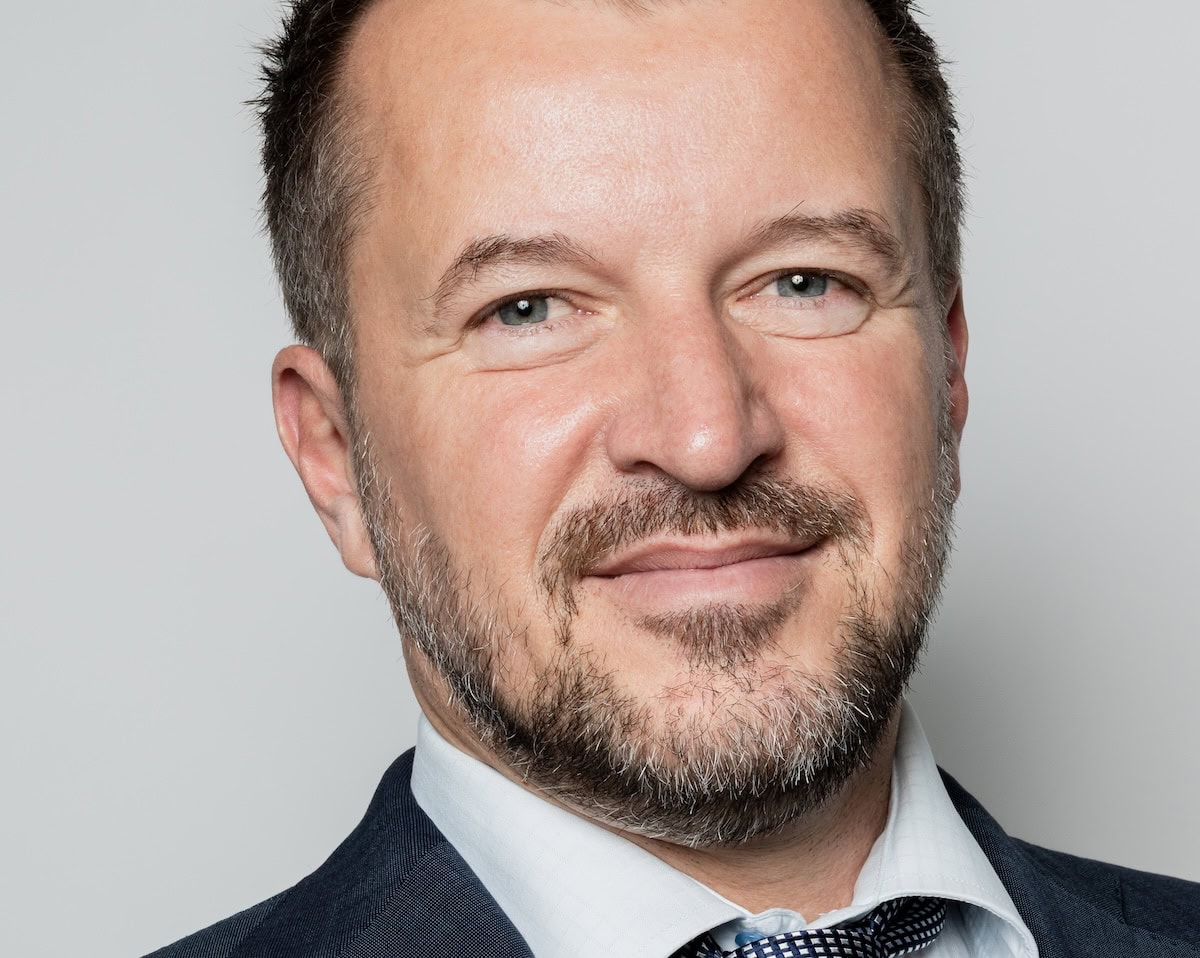
Picture Filip Linek Credit Flae Robotics
Thank you Filip Linek for the Interview
Statements of the author and the interviewee do not necessarily represent the editors and the publisher opinion again.