

LDR Academy founder Luciano Rodrigues Almeida shares how entrepreneurship shaped his journey from Brazil to Europe and his vision for connecting education, careers and professional opportunities.
Luciano, could you briefly introduce yourself and tell us what brought you from Brazil to Europe?
I’m Luciano Rodrigues Almeida, a Brazilian entrepreneur and university student currently living in Belgium. I grew up in the interior of Bahia, and entrepreneurship entered my life long before I knew that word. As a child, I sold papayas at the local market and went door to door selling bananas.
One of the reasons I came to Europe was to step outside the Brazilian bubble and look back at my own country from another perspective. When we are inside a reality, we often see its problems very clearly but can become blind to some of its possibilities. Distance helped me see Brazil differently — and also see myself differently.
My path has moved through human resources, psychoanalysis, people development and entrepreneurship. Living in Europe has made me question systems I once took for granted and has influenced many of the ideas I am building today.
You jokingly describe yourself as “the ideas kid.” What is behind this expression, and what does it say about the way you approach entrepreneurship?
I use “the ideas kid” with some humor because my mind is constantly asking: “Why does this have to work this way?”
That instinct has been with me for a long time. When I was a child in Bahia, I was already trying to find ways to sell something and reach people. Today the products and the doors are different, but in a sense I am still doing the same thing: knocking on doors.
Now the door might belong to a university, a company, a potential partner or even a newsroom. The technology changed, the scale changed and I changed, but I still believe opportunities often begin when you have the courage to knock.
Entrepreneurship has also taught me that having ideas is the easy part. An idea has little value until it meets a real need. So today I try to move from “I have an idea” to “Is there a real problem here, and will people actually use the solution?”
You started by questioning why education, professional networks, skills development and employment often exist separately. Which personal experiences led you to this question?
Part of it came from my own experience as a student, professional and immigrant.
I would look for a course in one place, professional opportunities somewhere else, networking on another platform, career guidance somewhere else again, and job vacancies on yet another website. Starting again in another country made that fragmentation even more visible.
A person does not experience life in separate platforms. Someone can be studying today, looking for a job tomorrow, needing career guidance next month and eventually becoming an entrepreneur or offering their own services.
That question became one of the foundations of LDR Academy: what if more of this journey could be connected instead of forcing people to restart their story every time they need something different?
LDR Academy began with the idea of connecting areas that are often separated. How did that original concept develop into what you are building today?
It evolved gradually.
Initially, the focus was much more on education and access to learning. Then I started seeing connections with employability, professional development, networking and entrepreneurship.
Instead of creating an isolated solution every time I encountered another problem, I began asking whether these problems were actually parts of the same journey.
Today, the broader vision is an ecosystem where a person can enter to learn something and continue in the same environment to develop skills, build professional relationships, discover opportunities and, eventually, offer their own knowledge or services.
LDR Academy is still evolving. I think it is important to say that openly. We are building and testing rather than pretending everything is already finished.
You speak openly about the fact that some of your ideas worked while others failed. Can you share an example of something that did not work and what you learned from it?
My first company failed.
What makes that experience especially meaningful to me is that it was, in many ways, an earlier attempt to build something connected to what I am trying to create today. I could have interpreted that failure as proof that I should stop. Instead, I eventually chose to understand what had gone wrong and try again with more experience.
I learned that enthusiasm cannot replace validation, focus or a sustainable business model. I also learned that failure does not erase what you discovered while trying.
So when I say I am building again, I am not starting from zero. I am starting with lessons that were expensive — emotionally, professionally and financially — to learn.
I failed once, but I did not give up. LDR Academy is also part of that continuation.
How do you determine whether an idea solves a real problem or simply sounds promising in theory?
I ask whether the problem exists without my product.
Are people already trying to solve it somehow? Are they spending time, money or effort on alternatives? Do they complain about it? Do I repeatedly encounter the same difficulty myself?
Then I try to put something real in front of people. This is one of the lessons I carry from my first business: building is not the same as validating.
A conversation can validate interest, but behavior is stronger evidence. Someone actually using a product tells you much more than someone saying, “That’s a great idea.”
What role do technology and digital solutions play in your vision for connecting education, career development and employability?
Technology is the infrastructure, not the purpose.
The purpose is helping people move forward.
Technology allows us to connect experiences that historically have been separated: learning, professional profiles, opportunities, communities, employers and services.
I am particularly interested in how technology and AI can reduce friction — helping someone understand what skills they need for an opportunity, find relevant learning, demonstrate what they know and connect with organizations looking for those capabilities.
But technology should make the human journey simpler, not more confusing. If the system is impressive but the person feels more lost after using it, then we have solved the wrong problem.
You are building without the resources and structures of a large startup. What are the biggest challenges you currently face?
Focus is probably the biggest one.
When resources are limited, every decision matters. You cannot build everything simultaneously, even when you can see many possibilities.
There is also the challenge of credibility. When you are building something new without a famous investor, a large team or a recognized brand behind you, you have to earn trust one conversation at a time.
That is where my childhood story still feels surprisingly current. I used to go door to door trying to sell what I had. Today I still have to knock on doors — only now I am presenting ideas, partnerships and a vision.
Funding, technology, partnerships and customer acquisition are obvious challenges, but prioritization and persistence sit underneath all of them.
You are working between Brazil and Europe. What differences do you see between the two markets when it comes to education, careers and entrepreneurship?
Living in Europe changed the way I look at Brazil.
From inside a country, it is easy to focus on what does not work. Distance gave me another perspective. I began to see not only Brazil’s difficulties, but also the creativity, adaptability and scale of possibilities that can be difficult to notice when they are part of your everyday life.
Europe, meanwhile, has exposed me to different institutions, cultures and ways of organizing education, work and mobility. Being able to observe both environments has made me less interested in deciding which one is “better” and more interested in what they can learn from each other.
That bridge between Brazil and Europe is increasingly part of how I think about LDR Academy.
Many young founders have plenty of ideas but struggle to decide which one to pursue. How do you decide whether an idea is worth investing your time and energy in?
I look for the intersection of three things: a real problem, people I can realistically reach and something I am willing to work on even after the initial excitement disappears.
That last part matters because ideas are exciting, while execution becomes repetitive, difficult and sometimes frustrating.
My first company taught me that wanting something badly is not enough. You have to listen, adjust and sometimes admit that part of what you built was wrong.
I now ask myself not only whether I love an idea, but whether I care enough about the problem to stay with it when the excitement is gone.
Where do you want to take LDR Academy over the next few years, and what are the next steps in turning your broader vision into reality?
I want LDR Academy to become an ecosystem connecting education, professional development, community and opportunity.
The ambition is simple to explain, even if it is difficult to build: someone might enter because they want to learn something, then use the same ecosystem to develop their career, build professional connections, find opportunities and, eventually, create or offer something themselves.
For companies and institutions, I want it to become another bridge to talent, learning and professional development.
The next step is not simply adding more features. It is proving that these connections create real value, strengthening partnerships and building a sustainable business around them.
I have already learned what it feels like when a company does not work. That makes me more ambitious about the vision, but also more serious about proving each step.
Finally, what three tips would you give to young founders who have an idea but do not yet have a large network, significant funding or an experienced team?
First: start before you feel completely ready. Reality will teach you things that planning cannot.
Second: talk to people before building too much. Your assumptions are not your customers’ reality.
Third: do not confuse a small beginning with a small possibility.
I think about that last point personally. I was once a boy in the interior of Bahia selling papayas at the market and knocking on doors. Today I live in Europe and I am still, in a different way, knocking on doors with an idea.
I do not know yet how far LDR Academy will go. That uncertainty is part of the story. What I do know is that a first failure did not have to become the final chapter.
I am still following these three pieces of advice myself.
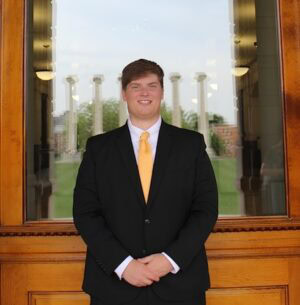
Image credit: Private photo / Luciano Rodrigues Almeida
Thank you Luciano Rodrigues Almeida for the Interview
Statements of the author and the interviewee do not necessarily represent the editors and the publisher opinion again.