


Emma Holten’s book is titled Underskud in Danish, which means „deficit“ in an economic context and „exhausted“ in a broader sense. The German title, Unter Wert, means both „undervalued“ and „underappreciated.“ These simple words perfectly sum up the author’s argument that care work deserves more recognition and compensation. As a feminist economist and policy advisor, Holten believes that undervaluing care threatens the economy by creating a deficit. Incidentally, Deficit is the title of the English translation.
„Without healthy, smart, well-educated people; good childcare; and efficient, modern hospitals, you can’t have the first-class labor force needed for a modern economy.“
herCAREER: Your entire book revolves around the concept of value. How do economists put a value on people, as say, opposed to feminists?
Emma Holten: For me, the core of feminism is the equal value of people. Everyone deserves a dignified life. However, throughout history, some people have been devalued in unreasonable ways. Economics is the study of value, and people tend to trust the market system’s valuation. Typically, if a product has a high price, most economists will believe it has high value. Low-price products are perceived as not particularly valuable. However, as I demonstrate in my book, economics and the market are deeply tied to culture. Price and value are not set in stone.
herCAREER: Therefore, shouldn’t we be able to assign a higher value to care work, whether it’s unpaid care at home or in care professions?
Emma Holten: There are two major challenges in the care sector. First: all bodies are different. The amount of care a person needs throughout their life varies greatly. For example, some people give birth in two hours, and then they’re good to go. Other women will be in labour for 24 hours, encounter complications and mother and child might require medical help for days and weeks. It’s nearly impossible to fit human beings into a system that is reliant on averages.
The other thing is: care is a long-term issue. When a midwife helps bring a baby into the world, we don’t know who and what that baby will grow up to be. They could become a big business owner generating jobs and revenue for the market – or a criminal who will cost the state a lot of money. Unlike cars, trains or dresses, human lives create a lot of uncertainty for economists.
herCAREER: So just because the economy is looking for a guaranteed return on investment (ROI), they won’t invest in some issues at all? That seems shortsighted. For example: Germany is cutting fees for psychotherapists, an already heavily regulated profession. Yet demand for therapy is through the roof, and one could easily argue that the mental health of workers has a huge ROI. How do you explain that?
Emma Holten: Germany is very interesting from the perspective of the care economy. Your government is very vocal about revamping the German economy with 500 billion Euros spent to build factories, weapons and green energy. At the same time, Germany has these huge mental health issues, especially among young people. Also, they have an inefficient healthcare system that is not digitalized and a very old education system. Many women still don’t work at all and in some rural areas they couldn’t even work, because the care infrastructure is so bad. All this separates people into social classes very early in life. In my opinion, 500 billion euros would be better spent overhauling the care economy and investing in people.
herCAREER: What mistakes is Germany making?
Emma Holten: In my opinion, Germany is putting the cart before the horse. They focus on industrial growth, new technology and defense spending. They say they mean to improve care work once the economy reaps returns. However, quality care is what makes a functioning economy possible. Without healthy, smart, well-educated people; good childcare; and efficient, modern hospitals, you can’t have the first-class labor force needed for a modern economy. In its hubris, Germany regards industry as the true economy and care as a secondary one. I predict that they will have all the new factories and still be looking for skilled labor.
herCAREER: So politics is failing women, but what about the organizations, the employers?
Emma Holten: German industrialists and entrepreneurs see themselves as value creators because they provide jobs. However, they do not see caring for the workforce as their responsibility. In Denmark, women’s income falls by up to 20% when they have their first child and women are rightfully angry about that. In Germany, it’s between 40 and 60% over 10 years – with a big difference in Eastern and Western German women, by the way. Companies exploit the value created by others, especially women, and take it for granted. It must have been disappointing for women to see that care was not considered in these recent investments.
herCAREER: We struggle to put a value on professional care work because it’s difficult to measure and predict, and almost impossible to scale up. We don’t attribute any societal value to unpaid care work because it’s „free“. If it weren’t free, however, Prognos Institute has calculated private care work to be worth 1.2 trillion euros a year — a third of Germany’s GDP.
Emma Holten: Yes, it varies between 30 and 40 percent, depending on how the work is priced.
herCAREER: So why don’t these numbers have an impact?
Emma Holten: There is a power struggle over resources. Germany has one of the highest gender pay gaps in Europe, and many women are not employed at all. The German economy essentially enjoys free care work, even though it is difficult, demanding, and draining. Women provide labor for your country and pay the price out of their own pockets.
herCAREER: During the pandemic, we realized how precious care is as a resource and called care workers „system relevant“. Government literally admitted that care workers carry the system, yet, neither state nor the economy ever took the opportunity to show appreciation and increasing their salaries.
Emma Holten: And now the people who created the system are confused: Why doesn’t anyone want to be a nurse anymore? Why doesn’t anyone want to have children anymore? It is because they created a system that is hostile to caregiving. I also think they are angry that women no longer accept second-class lives. The rise in conservative opinion and sexism against women is no coincidence. It’s the classic patriarchal playbook.
herCAREER: Do you think the concepts of the manosphere, conservatism, and authoritarianism are all rooted in a care crisis?
Emma Holten: It has certainly caused polarization. I believe, many men are angry about their circumstances because they feel unloved and uncared for. They feel they cannot contribute something meaningful to the world. Honestly, I believe many of those men would be happier as nurses than in any other profession. If they want to leave a legacy, that’s a great way to do it.
herCAREER: But …?
Emma Holten: But the way we’re building our societies, not even women want to do women’s work anymore. That’s why poorer women from low-income countries are being flown in to do it now. We’re creating a new group of second-class citizens who have even less power than the women who have grown up here.
herCAREER: In your book, you argue that care work makes women poor and men rich. It seems that unpaid and underpaid care work is making poor people poorer and rich people richer?
Emma Holten: Women and families are expected to bridge the care gap privately. Adding elderly care to an already depleted system puts women at risk of becoming entirely dependent on men. With this in mind, women in Germany are in a more precarious position than women in many other European countries. In regards to that, I think there is a great schism in Germany’s self-image as a leader of Europe. Consider Denmark: They have a high labor force participation rate for women, all thanks to the introduction of free childcare.
herCAREER: Have you observed any best practices or national and regional policies that have had a significant impact in other countries?
Emma Holten: One idea that many feminist economists discuss is shortening the workweek for everyone, including men. The idea is: Rather than making women’s and mothers‘ lives more like men’s, we should do the opposite. We should try to get men to work closer to the number of hours that women work to improve quality of life overall. This concept is more common in left-wing industries and urban areas, but working-class men from poorer areas especially lack this opportunity. It’s time to start talking about men’s right to care.
herCAREER: This is the opposite of what our chancellor, Friedrich Merz, proposes. He believes that we should work longer hours and years before retiring.
Emma Holten: Denmark is a good example. We work fewer hours there than in Germany, yet we are more productive because we are more efficient. The idea that eight hours and five days are magical numbers is absurd. Ultimately, this discussion comes down to how you define value. If you say work always creates value, I disagree! In my opinion, work can destroy value, too. Work takes time away from family and the local community. It can destroy health and the body. Friedrich Merz does not see the other side of the equation. Work also destroys natural resources, bodies, health, and families. How much could we save in mental health and stress-related costs? Imagine if people doing hard physical labor worked five hours instead of eight. Would their bodies give out at 55? What would that mean for their longevity? In my book, I explore the connection between the body and mind and economics.
herCAREER: Do you have any other suggestions?
Emma Holten: I believe the German government should put more power into the hands of the care workers themselves. Currently, care workers are centrally controlled, which means they have little authority over their time. They must account for every minute of the day. No one in the private sector would accept this level of control. Granting more autonomy to the profession would demonstrate respect. While this would require considerable investment, it would pay off by creating value and wealth in a country where too many people seek care and treatment but don’t receive it.
The interview was conducted by herCAREER editor Kristina Appel.
Emma Holten will speak on October 22 at the Authors-MeetUp during the herCAREER Expo about the value of care work in modern society. The discussion will be held in English.
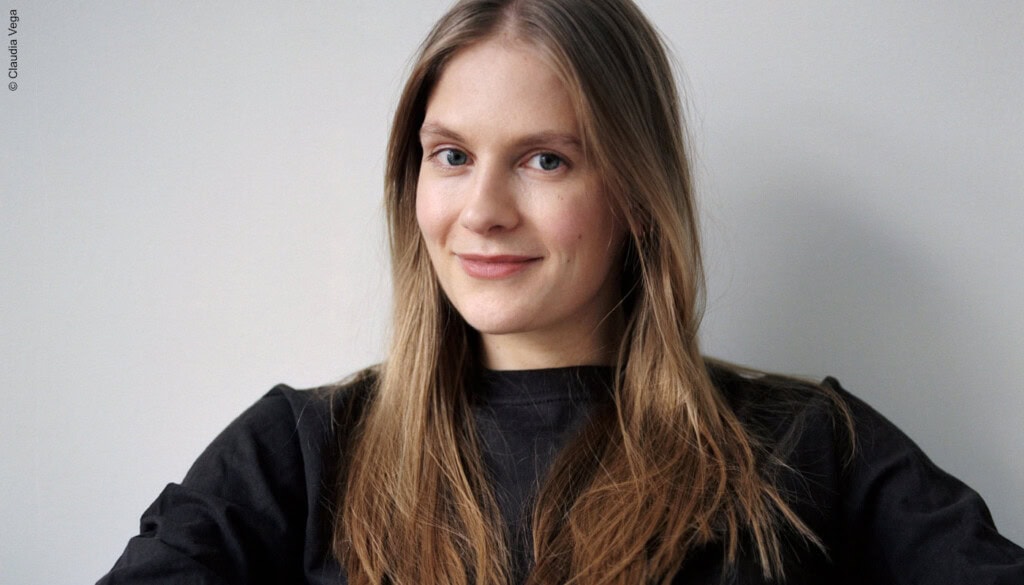
Picture Emma Holten, author, member of the Expert Forum of the European Institute for Gender Equality (EIGE), and member of the Human Rights Watch Women’s Rights Advisory Committee. © Claudia Vega
Source messe.rocks GmbH